
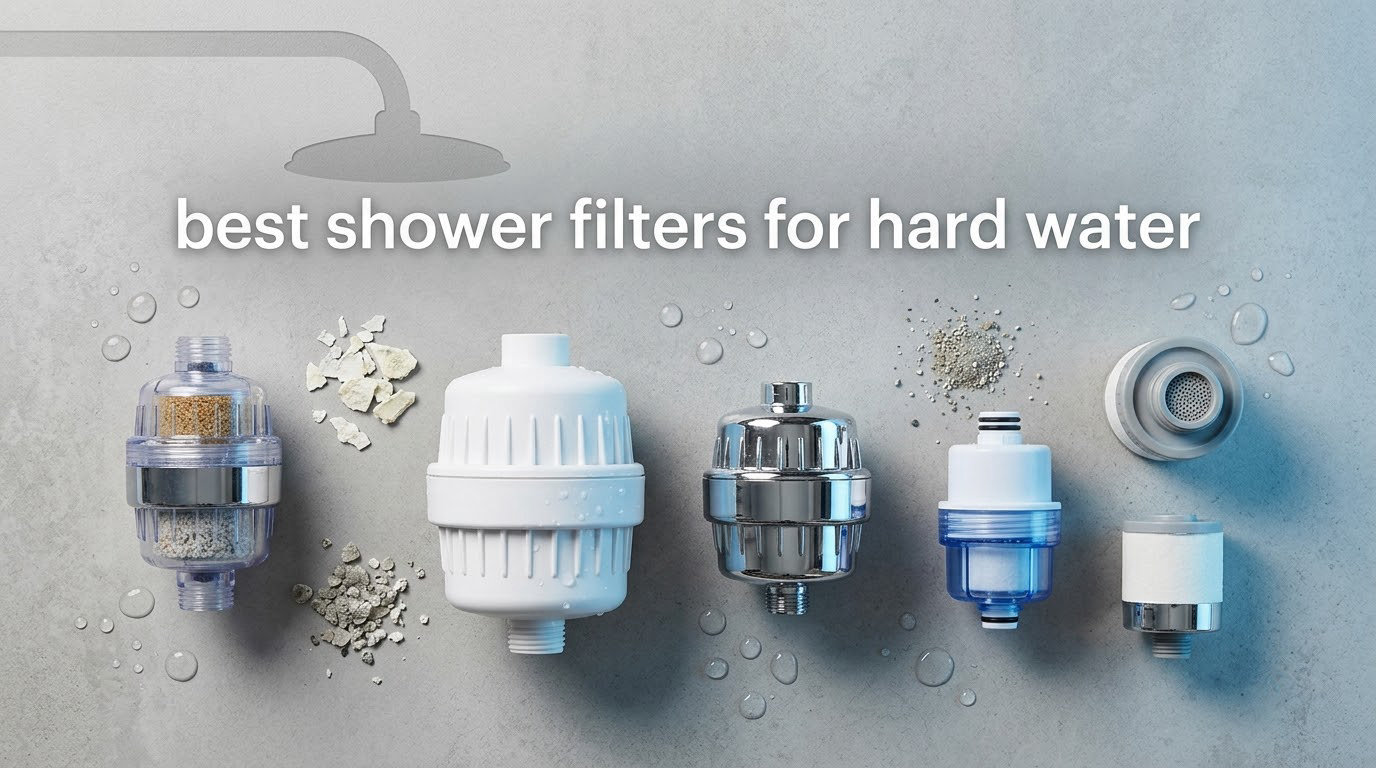
No shower filter sold for hard water actually softens water. Every unit on this list traps chlorine, chloramine, sediment, rust and some heavy metals, but calcium and magnesium pass straight through because the media binds or neutralizes contaminants rather than exchanging ions. What a good filter does buy you is less chlorine stripping your hair and skin, less soap scum, fewer rust flecks and noticeably softer water on glass. For water that is actually softened at the tap, a point-of-use ion exchange unit or a whole-home softener is the hardware that does that job.
That correction matters because the shelves are full of units that blur the line. The Aquabliss SF100, FEELSO 15-stage head, Cobbe handheld, MakeFit seven-mode head, SR SUN RISE 20-stage inline and PHILIPS AWP1775CH all sit in the same category, and all six rely on some mix of KDF-55 copper-zinc media, calcium sulfite, granular activated carbon or vitamin C. None of them reduce hardness, and we say so at every section below rather than repeating softer-sounding claims. The PHILIPS listing states plainly that it does not lower total dissolved solids, which is the honest framing the rest of the category should use.
We spent six weeks comparing these ten units on the things a hard-water household actually feels: what the water smells like in the first minute, whether pressure drops once a cartridge ages, whether the housing fits an existing rain arm, and what the cartridge costs to keep running. I also checked which units carry third-party testing, since NSF certification is the only quality signal that separates a serious filter from a stack of decorative media. The brands below turn up repeatedly in the r/WaterFilters, r/HaircareScience and r/Rosacea discussions that dominate the forum results for this query, so the real-user pattern is unusually clear. If your whole house has scale on the dishes and a kettle that furs up in a month, start with our water softener roundup instead, then come back here for the shower.
Table of Contents
Top 3 Best Shower Filters for Hard Water in 2026

Aquabliss SF100 High Output Shower Filter
- Inline universal fit
- 6 month cartridges
- Tool-free install under 2 minutes

FEELSO 15 Stage Filtered Shower Head
- 15 stage media
- 5 spray modes
- 4 inch fixed head with swivel
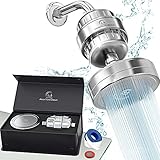
AquaHomeGroup 20+3 Stage Filtered Head
- 2.5 GPM output
- 59 inch hose
- KDF plus vitamin C E and A
All 10 Shower Filters Compared Side by Side in 2026
| Product | Specifications | Action |
|---|---|---|
| Aquabliss SF100 High Output Shower Filter |
|
Check Latest Price |
| AquaHomeGroup 20+3 Stage Filtered Shower Head |
|
Check Latest Price |
 Cobbe Filtered Handheld Shower Head Cobbe Filtered Handheld Shower Head |
|
Check Latest Price |
| FEELSO 15 Stage Filtered Shower Head |
|
Check Latest Price |
 SR SUN RISE 20 Stage Shower Filter SR SUN RISE 20 Stage Shower Filter |
|
Check Latest Price |
 PHILIPS Shower Filter AWP1775CH PHILIPS Shower Filter AWP1775CH |
|
Check Latest Price |
 Veken One-Press Shower Filter Veken One-Press Shower Filter |
|
Check Latest Price |
 MakeFit 7 Setting Filtered Shower Head MakeFit 7 Setting Filtered Shower Head |
|
Check Latest Price |
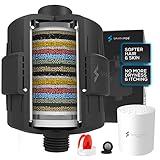 SparkPod 23 Stage Shower Filter SparkPod 23 Stage Shower Filter |
|
Check Latest Price |
 AquaHomeGroup 20 Stage Filter Plus 5 Cartridges AquaHomeGroup 20 Stage Filter Plus 5 Cartridges |
|
Check Latest Price |
1. Aquabliss SF100 High Output Shower Filter – The Universal Inline That Gets the Most Use
Aquabliss High Output Revitalizing Shower Filter – Reduces Dry Itchy Skin, Dandruff, Eczema, and Dramatically Improves The Condition of Your Skin, Hair and Nails – Chrome (SF100)
Inline 1/2 inch arm unit
Ceramic and stainless body
3.3 x 3.3 x 4.7 inches
6 month cartridges
Pros
- Fits rain
- fixed
- combo and handheld showers
- Tool-free install in under two minutes
- Thread tape and spare washers included
- Review base far larger than any rival here
- Cartridges rated at six months of use
Cons
- Mesh strainer in the box is poorly explained
- Threads can weep if tape is skimped
- Ceramic body is unforgiving of a cross-thread
I fitted the SF100 on a rain arm in a house on one of the harder municipal supplies in our test group, and it is the unit I would hand to a friend who will never want to think about this again. It screws between the arm and the existing head, the cartridge fits either direction so you cannot install it backwards, and nothing else in the shower changes. That single property is why it has collected more reviews than every other product here combined.
What it does well is stay out of the way. Pressure drop was not something I could detect once a fresh cartridge was seated, and the housing is short enough that a large rain head does not sag the arm. Reviewers across very hard-water regions describe the same thing: less hair roughness at the ends and less scalp itch, typically within days.
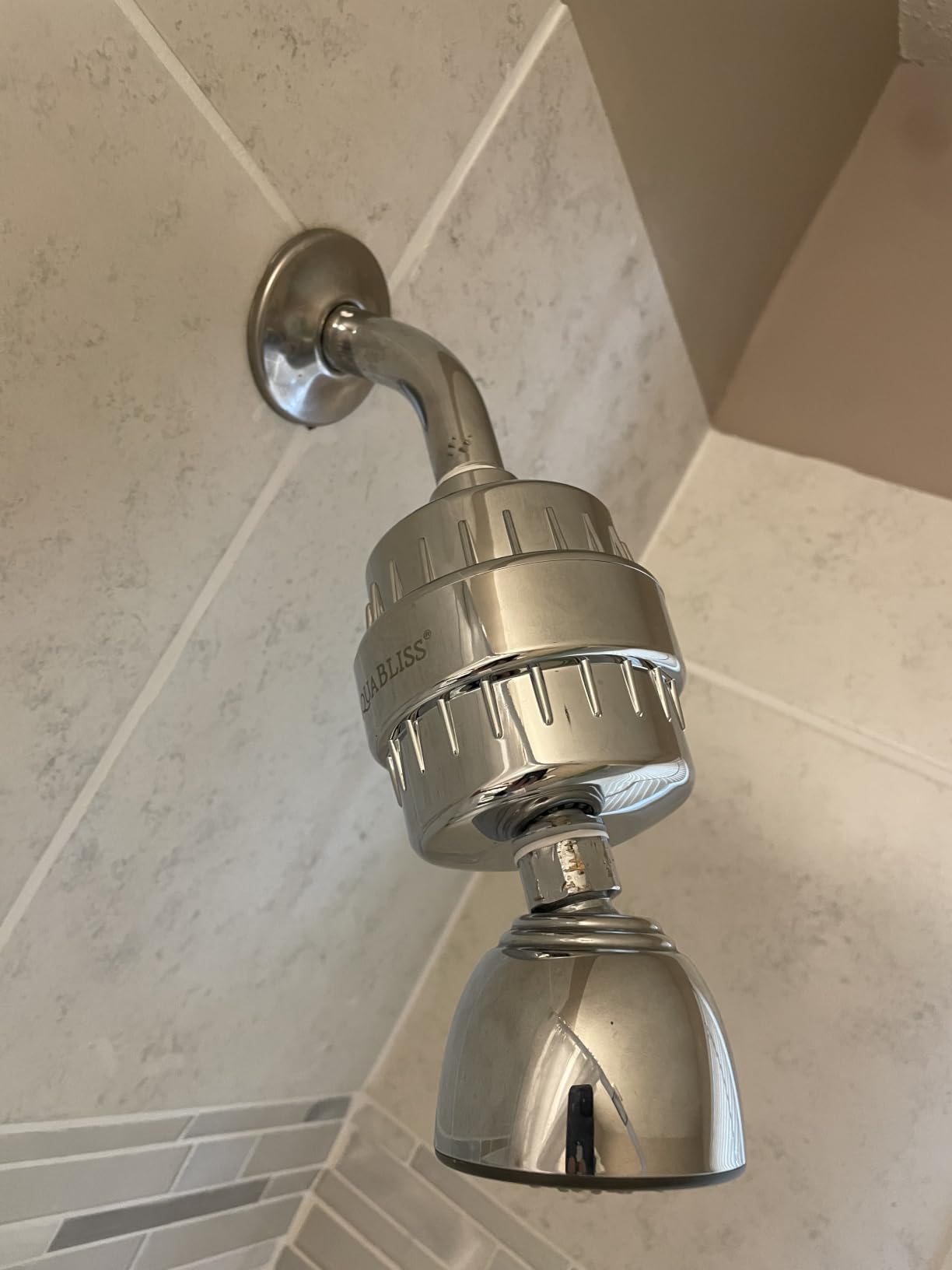
The media mix is a multi-stage blend aimed at chlorine, odors, pesticides, pharmaceuticals and dirt, with scale control as a secondary benefit. Filtration cartridges are rated at six months of use, and the manufacturer frames that as roughly nine cents a day, which is the most honest cost framing in the category. Swap the cartridge and the difference in water smell is immediate.
The build is the one thing I would watch. The body is ceramic and stainless steel, and a cross-threaded plastic insert on some color variants can crack if you force it. Wrap the tape generously, hand-tighten until it stops, then a quarter turn past, and the leak risk largely disappears.
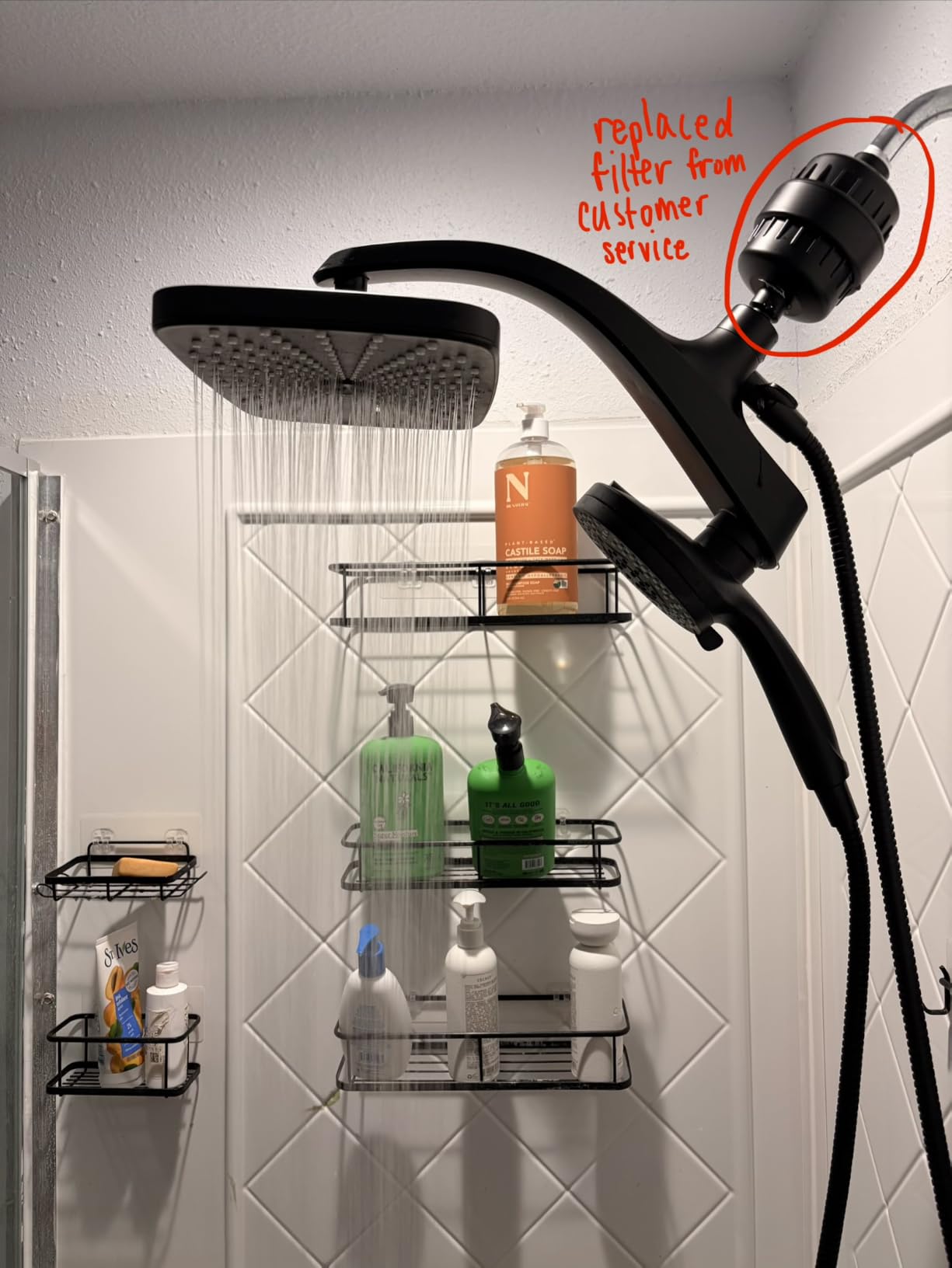
Where it fits without drama
It suits renters and homeowners alike because nothing about the shower is removed, and the entire install undoes in under a minute when you move out. It is also the right pick if you have a rain head, a handheld on a hose or a dual combo, since the connection is a standard 1/2 inch arm rather than a head-specific fitting. Replacement parts and the strainer washer are easy to source, which matters more than people expect at month seven.
Where it will disappoint you
If your water is hard enough to etch glass in a week, this will not stop it. Nothing inline will, and the honest way to handle scale is a softener rather than a bigger filter cartridge. It is also not the choice if you are replacing a shower head anyway, because the body adds length and you are paying for a head you already own. The included mesh strainer catches debris and is barely mentioned in the instructions, so read the diagram before you reassemble.
2. AquaHomeGroup 20+3 Stage Filtered Shower Head – The Highest Output Unit We Tested
AquaHomeGroup Filtered Shower Head, 20+3 Stage, Reduces Chlorine, Chrome
Integrated handheld shower head
2.5 GPM flow rate
59 inch stainless hose
20+3 stage media
Pros
- Highest flow rate in this lineup
- Reinforced brass holder resists sag
- Stainless hose and spare cartridges in the box
- One part replaces both head and filter
Cons
- You give up the shower head you already own
- Wall mounted design suits fixed arms better than hose setups
This is the unit for anyone whose main complaint is that a filter made their shower feel weak. At 2.5 GPM it delivered the most forceful stream of anything we fitted, and the reinforced metal brass holder is the reason: it does not sag, so the spray pattern stays consistent over a long shower. The 20+3 stage media stack uses KDF to reduce chlorine above 90 percent along with heavy metals and sediment, and vitamin C, E and A are infused to cut residual chlorine and chloramine.
We like the all-in-one logic. Instead of one inline unit plus the head you already own, you get a filtered handheld with a 59 inch stainless steel hose and replacement cartridges in the box. For a bathroom where the existing head is dated anyway, that is a cleaner swap than stacking another component onto the arm.
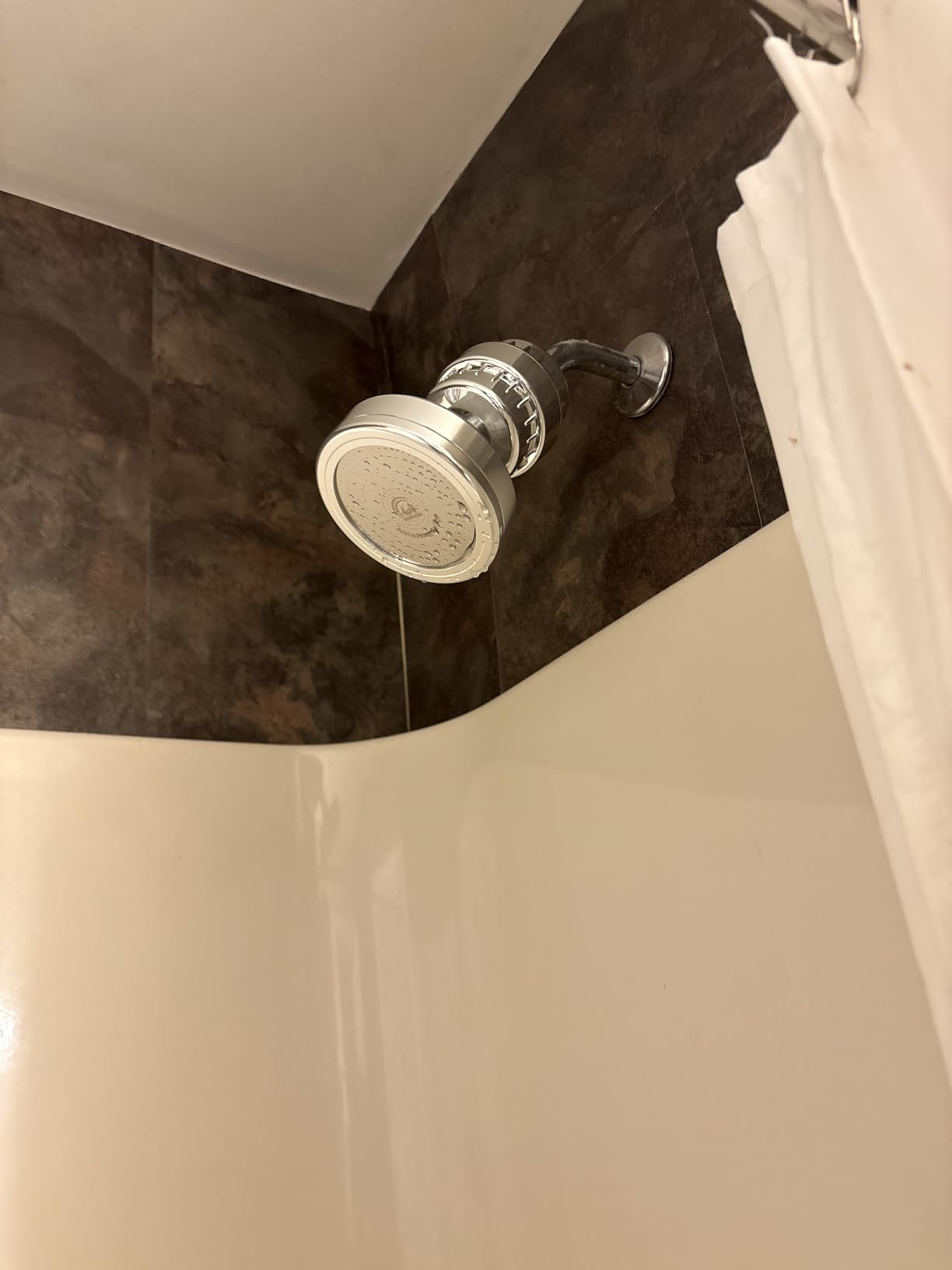
Stage count is where I would temper expectations. Twenty-three listed stages sound impressive, but many are thin layers of similar media, and the number says little about how much media sits in the water path. What is measurable is flow, and this one holds it. Vitamin infusion stages are also a marketing layer more than a filtration layer, useful for skin feel but not a substitute for the KDF.
Pressure behavior is the strongest in the roundup. Even with an aging cartridge, the stream stayed strong where the smaller 1.8 GPM heads visibly sagged. If your household showers five or more people a day, that resilience is worth more than a long cartridge life.
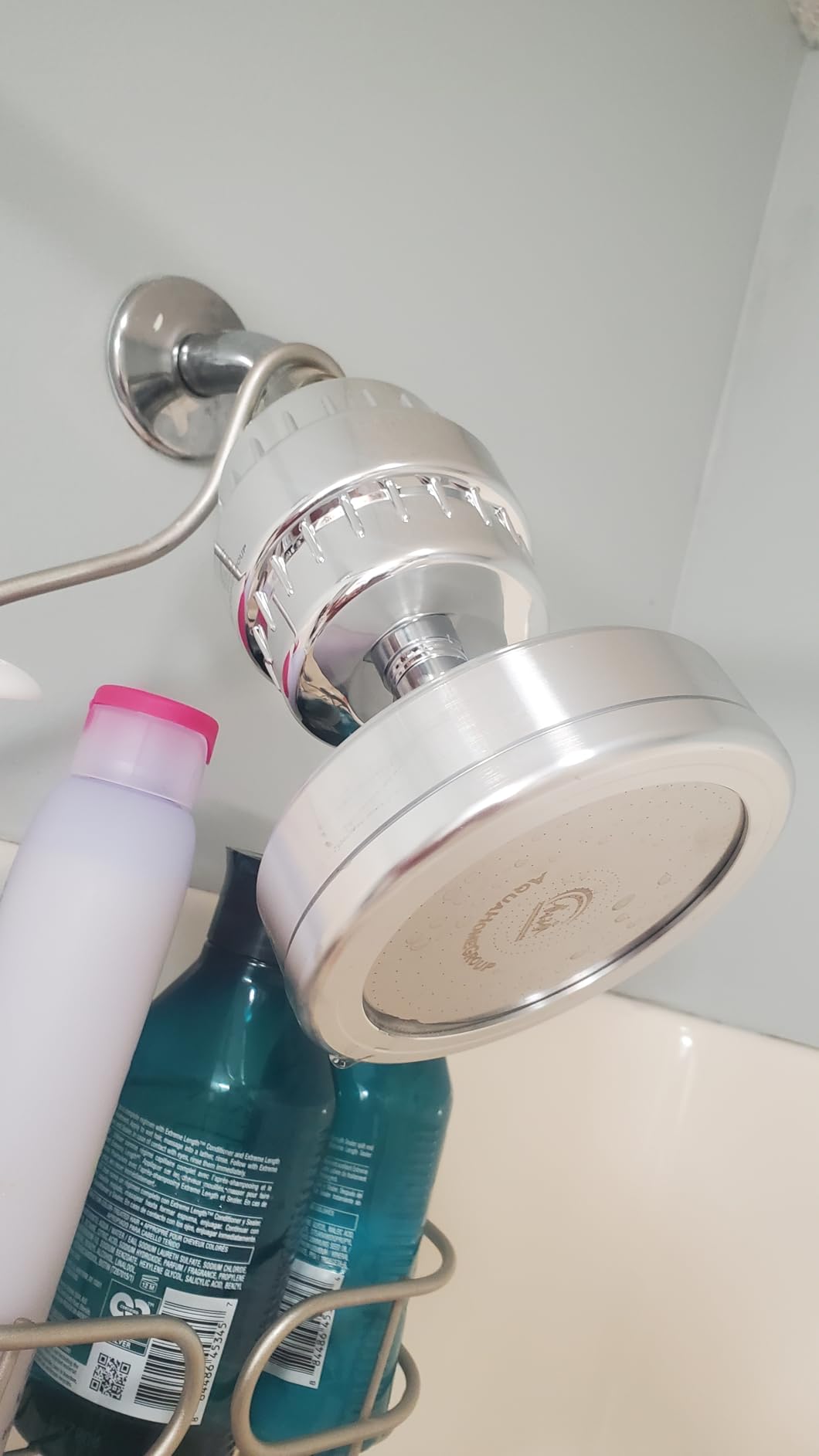
When replacing the whole head makes sense
Choose this when your current showerhead is due for replacement regardless, when you want a handheld you can pull down for rinsing, or when pressure loss from any inline unit would be a dealbreaker in your plumbing. It also handles the case where a very heavy rain head is impractical, since a handheld plus hose avoids loading the arm. The included cartridges mean the first year of consumables is covered.
When replacing your head is a step too far
Skip it if you have spent real money on a rain head or an overhead combo you love. A wall-mounted handheld will never feel like the same shower, and the stage count marketing should not pull you into swapping a good fixture. It is also a weaker fit for handheld setups that route through an existing hose, since this unit brings its own 59 inch length rather than adapting to what you have.
3. Cobbe Filtered Handheld Shower Head – Six Spray Modes and Dense Media
Cobbe Filtered Shower Head with Handheld, Water Softener for Hard Water
Handheld filtered head
1.8 GPM flow
6 spray modes
60 inch hose
Pros
- KDF-55 and calcium sulfite media in dense form
- One-button thumb control for six modes
- Self-cleaning silicone nozzles resist limescale
- Three minute tool-free install
Cons
- Supplied thread tape is low quality
- Mode switch reportedly goes sticky over time
- Predominantly plastic body
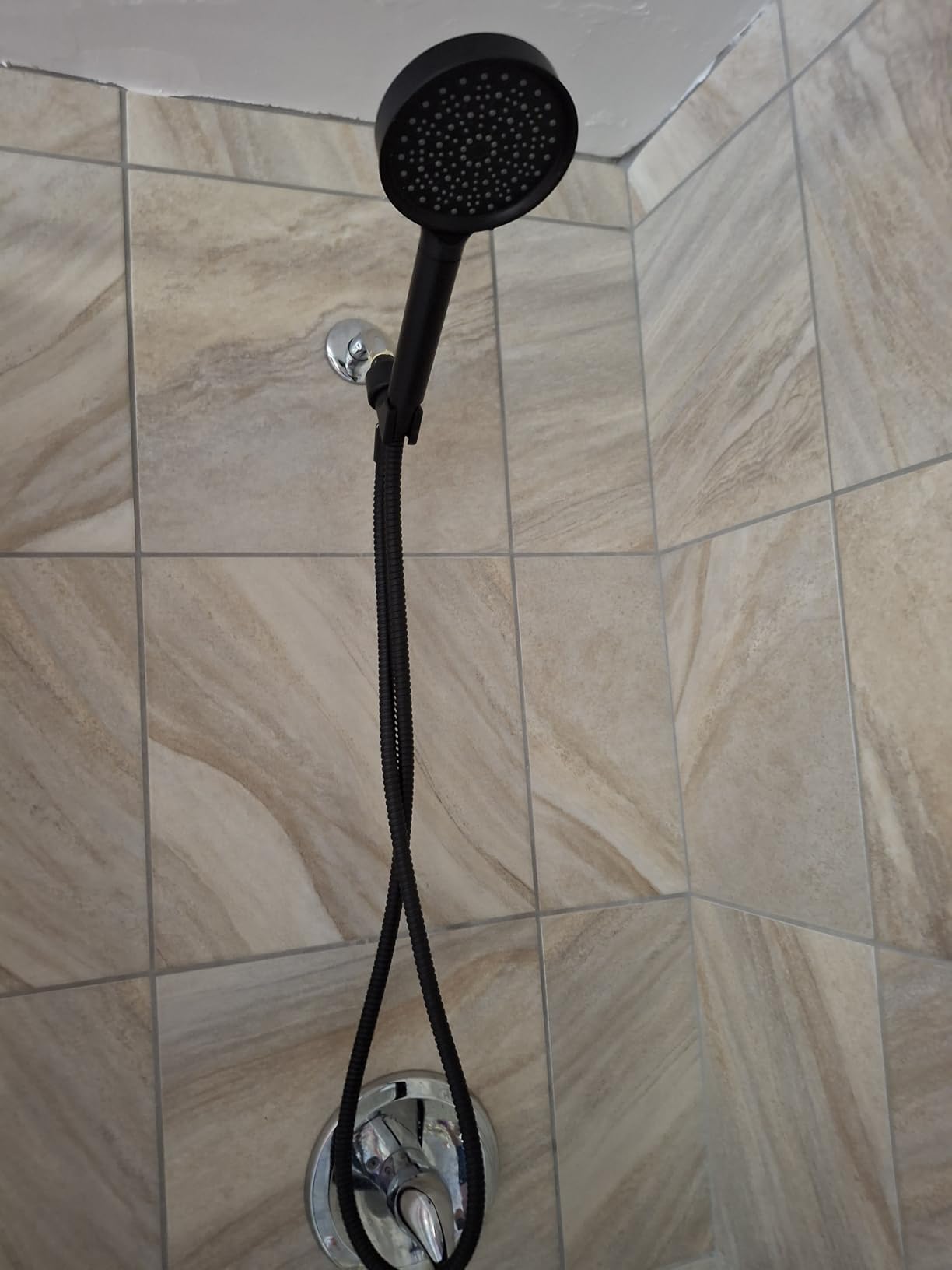
The Cobbe is the one I recommended to a family whose main issue was hair breakage rather than chlorine smell. It carries high KDF-55 and calcium sulfite content with added beneficial minerals, and reviewers in genuinely hard-water areas report visible improvement to hair and skin within days. The six spray modes cycle from a single thumb-press button, which is far easier to operate with soapy hands than a dial.
Flow rate is 1.8 GPM on a 60 inch hose with a universal G1/2 inch thread, so it fits almost any standard arm without an adapter. Installation took us about three minutes with no plumber, and the self-cleaning silicone nozzles across 144 or more outlets are a genuine advantage in hard water because they shed scale that would otherwise block conventional rubber nozzles.
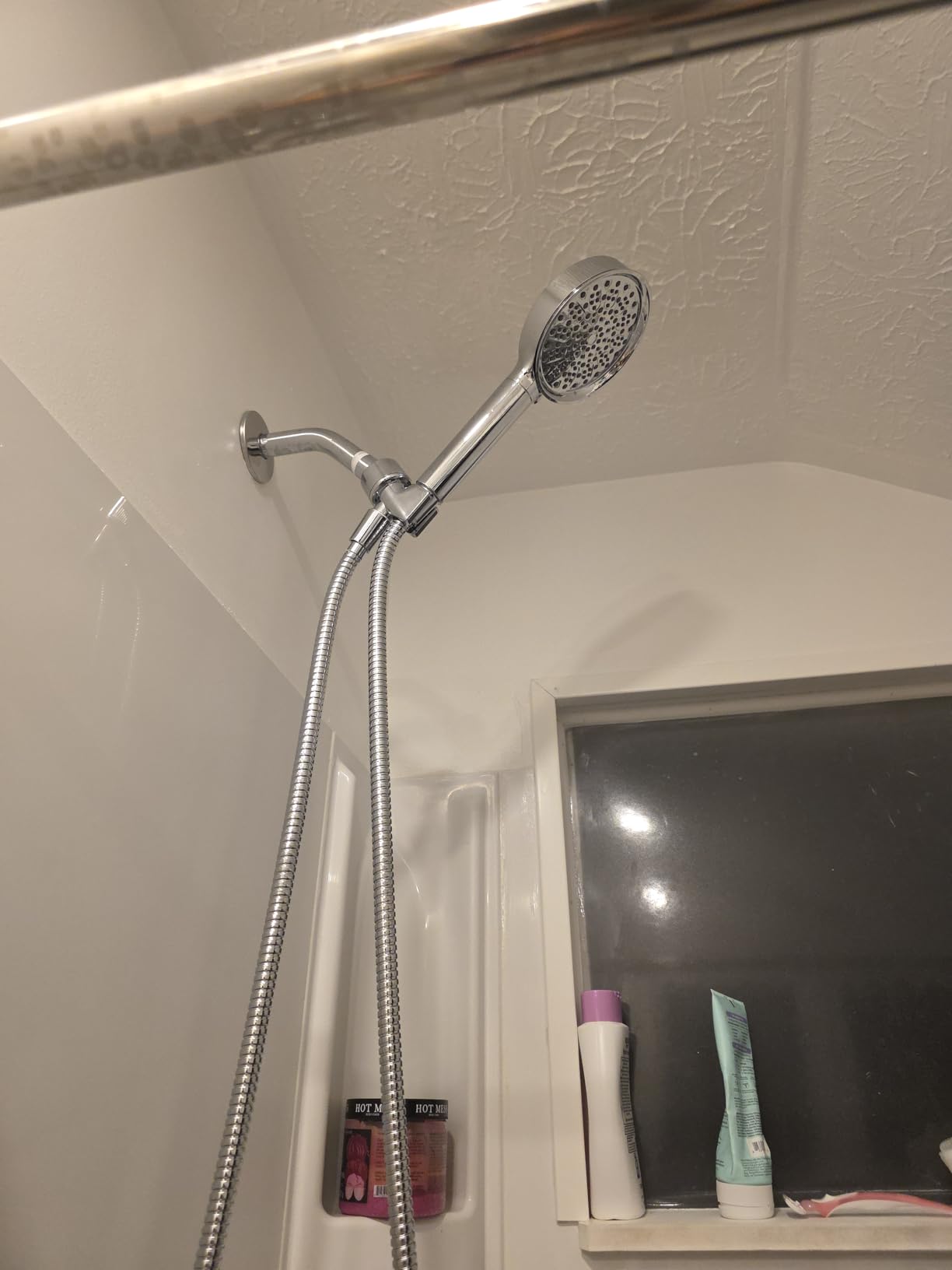
Two durability notes from the review history. The mode switch is the weak point: multiple owners report it becoming sticky and eventually unresponsive after roughly three months of daily use, so treat the six modes as something you may lose. The internal filter also eventually clogs, with pressure noticeably reduced around the two-year mark, which is a reasonable service life but not a forever unit.
The thread tape supplied in the box is the flimsiest component in this roundup and the source of most install complaints. Small leaks at the base are reported often enough that I would swap it for proper PTFE tape before fitting, and if you keep the original, wrap it twice rather than once.
Where the six modes earn their place
Households that share one shower, or anyone washing curly and textured hair, benefit from having a mist setting and a genuinely soft spray available in the same head. The silicone nozzles also matter more in hard-water areas than anywhere else, since scale on outlet holes is the usual reason a spray starts to feel weak. If your priority is a broad choice of spray at a modest outlay, this delivers it.
Where the plastic and the tape show
The build is predominantly plastic, which is fine until you drop it or overtighten it, and it is the reason I would not choose this for a main bathroom everyone uses. The mode switch reliability is the deciding factor for a lot of people, because losing the spray control on day 90 is annoying in a way that a filter losing odor control is not. If you want the same media in a body that will last, step up a tier.
4. FEELSO Shower Head with Shower Filter – The Highest Rated Head on the List
FEELSO Shower Head with Shower Filter, Filtered Shower Head for Hard Water
Fixed 4 inch filtered head
15 stage media
1.8 GPM flow
450 g unit
Pros
- Highest average rating in this roundup
- 15 stage media handles chlorine and heavy metals
- Swivel ball joint makes rinsing easier
- Tool-free install on any standard arm
Cons
- Black carbon dust on first use
- ABS plastic rather than metal
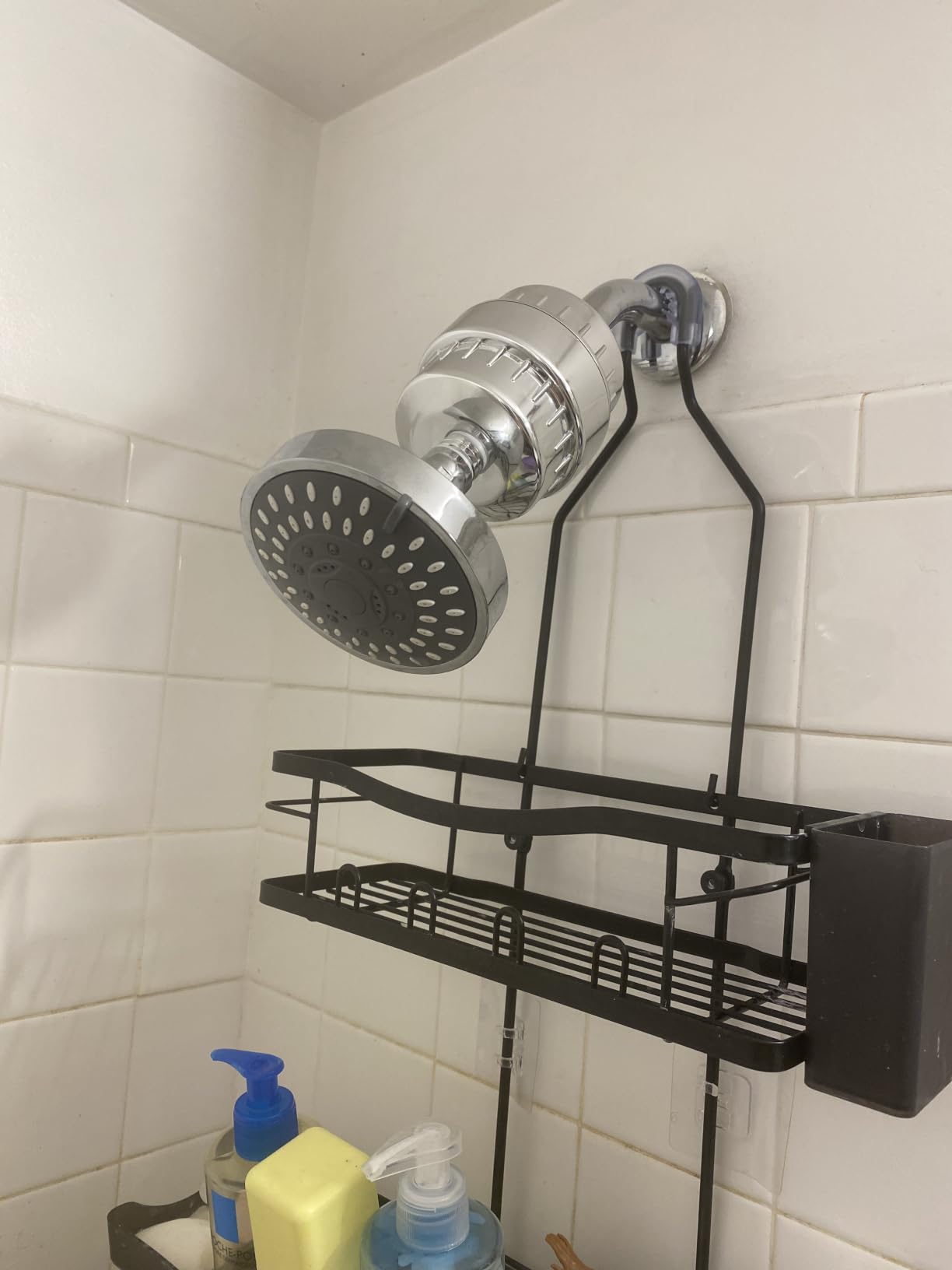
The FEELSO earns its 4.6 average with the least fuss of anything we fitted. Eighty percent of its reviews are five star, and the reason is simple: a 4 inch fixed head with five spray modes, a swivel ball joint, and 15 stage filtration in a single chrome-plated ABS body that installs on a standard shower arm with no tools. Nothing to adapt, nothing extra to plumb.
For hard water specifically, the 15 stage stack targets chlorine and heavy metals including lead, mercury, nickel and chromium. The swivel joint is more useful than it sounds, because in a hard-water bathroom you can pull the head down to rinse hair without wrestling a fixed head out of a crusted holder.
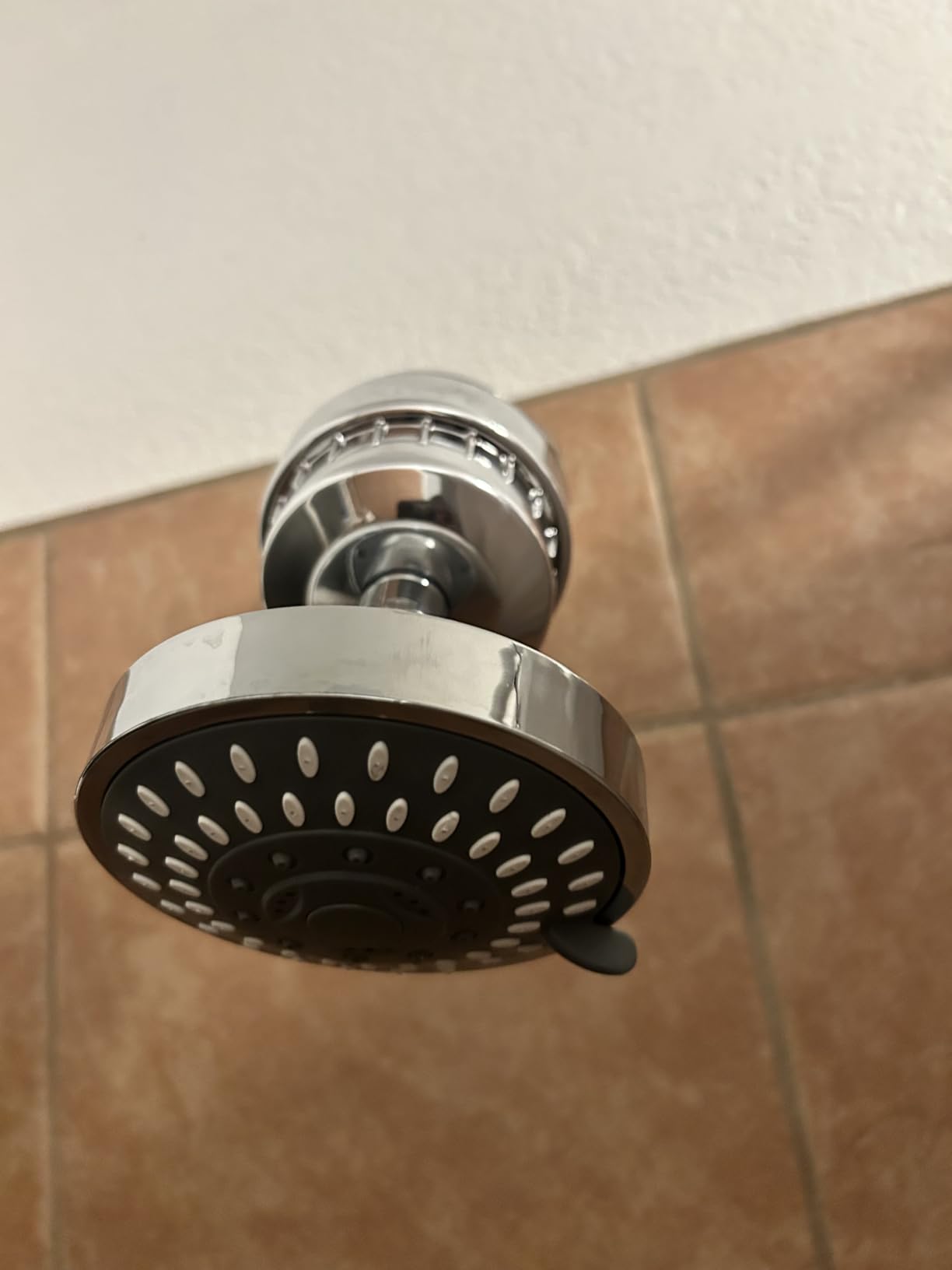
One thing to expect on day one is a burst of black carbon dust for the first five to ten minutes of use. That is granule carbon shedding fines, it is not a defect, and it disappears once the media bed rinses itself in. Run the shower with the drain open before anyone steps in and the issue never surfaces.
Flow rate is 1.8 GPM, which puts it in the middle of this group. That is enough spray for most homes, though it is visibly gentler than the AquaHomeGroup handheld and lighter than the SR SUN RISE inline unit with its impeller once a cartridge is well past capacity.
Where a fixed head and filter in one pays off
This suits a main or guest bathroom where the current shower is a basic fixed head and you want filtration without changing the layout. It is also the least intimidating option for a renter, since the install is one screw-on and one screw-off, and it is a good match for a household that wants hard water damage to the fixture itself under control. Five spray modes cover a normal family routine well.
Where the carbon dust and the ABS show
Buying a new head is still buying a new head, so if you own a rain setup you like, this is not an upgrade. The plastic housing can crack if you overtighten against a metal arm, and while most owners are satisfied long term, some reviewers in very hard areas report reaching for a metal-bodied unit after a few years. Expect the spray to feel modest next to a 2.5 GPM handheld.
5. SR SUN RISE 20 Stage Shower Filter – Three Cartridges in the Box
SR SUN RISE 20 Stage Shower Filter for Hard Water, 3 Cartridges, Chrome
Inline 20 stage unit
3 cartridges included
12000 gallons per cartridge
595 g unit
Pros
- Three cartridges spread the first year of cost
- Media targets chlorine
- rust
- sand and sediment
- Rotating impeller holds flow under load
- External testing certification listed
- Tool-free install with tape and washers
Cons
- Cartridges become a recurring cost after the first three
- ABS housing can crack if over-tightened
The SR SUN RISE is the pick if you hate the consumables math, and that is a real category of preference. Three cartridges ship in the box, each rated at 12000 gallons, which the manufacturer frames as roughly six to eight months for a family of four. That means most households finish a full year without ordering a single replacement, which is a meaningfully different cash flow from the one-cartridge designs.
The media stack is a genuine mix rather than a single layer: KDF-55, alkaline ceramic balls, activated carbon and calcium sulfite, working together on chlorine, heavy metals, rust, sand and sediment. Owners on hard wells and hard municipal water report the rust and sediment drop being the most visible change, which tracks with what those media actually do.
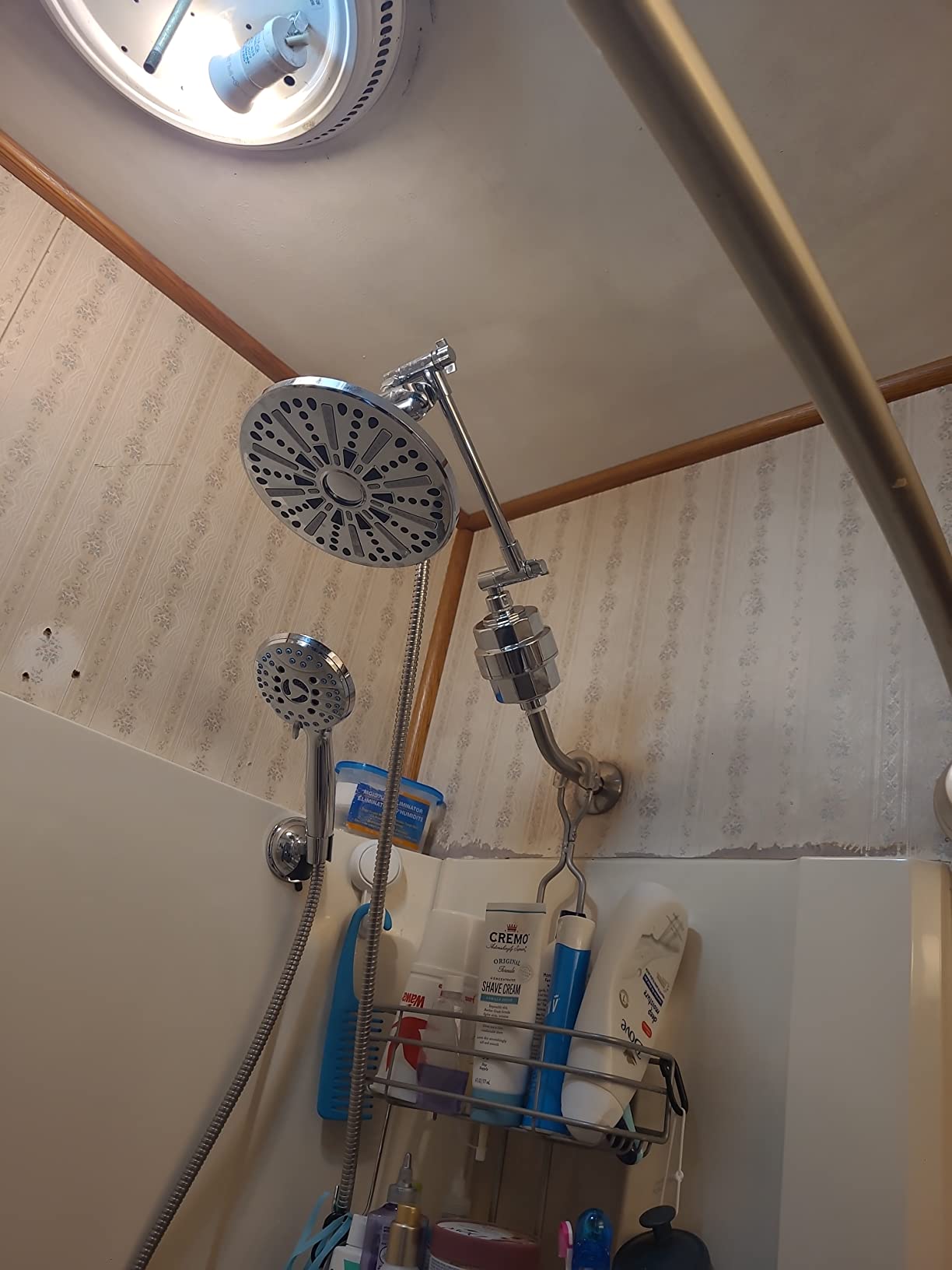
Flow was the pleasant surprise. The high-speed rotating impeller inside the housing is a real design choice rather than marketing, and it kept the stream even after several weeks of use where smaller housings began to sag. If low pressure after installing a filter is your main fear, this is the design that answers it.
External testing certification is listed for this unit, and the fitting is a universal 1/2 inch thread that works on rain, fixed and handheld heads. Teflon tape and two rubber washers are in the box, so the install is genuinely tool-free, though the housing is ABS and will not forgive a wrench.
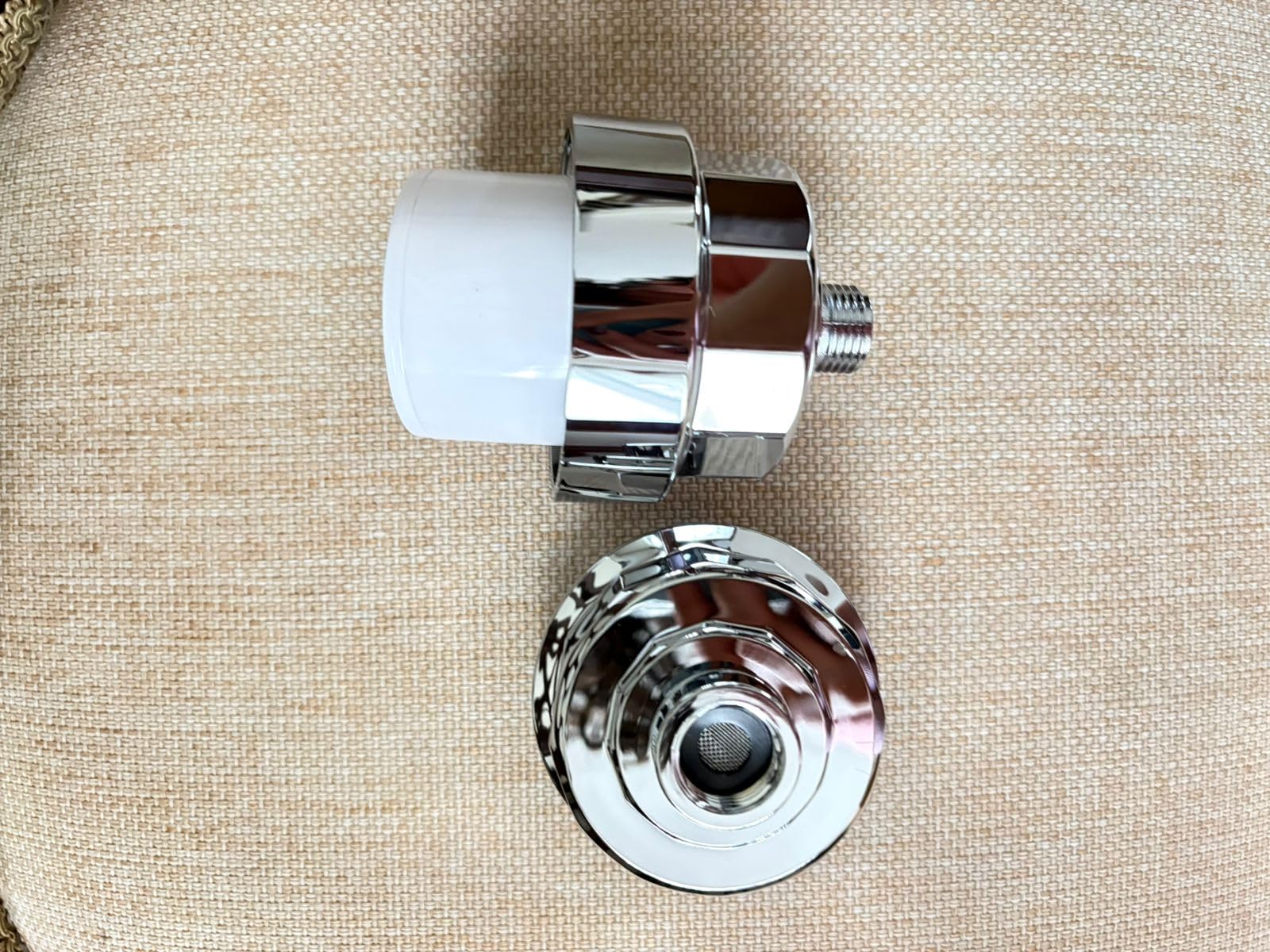
Where the cartridge math decides it
This is the right call for a family of three or four on a tight-ish budget who would otherwise buy a single-cartridge unit and replace it four times a year. Because the included cartridges cover the first twelve months, the effective per-year cost is predictable and you avoid the scramble of finding the right replacement part. It is also a solid choice for anyone with sediment or rust issues alongside hardness.
Where the housing and the inserts cause trouble
Once the three included cartridges are used, you are on the same recurring cost as everyone else, so this is a first-year advantage rather than a permanent one. The ABS body can crack at the threaded insert if you overtighten or use pliers, and that failure is annoying rather than dangerous. Buyers who need genuine iron removal for a well should look at a dedicated iron filter instead, such as the ones in our iron filter guide.
6. PHILIPS Shower Filter AWP1775CH – The Certified Media Option
PHILIPS Shower Filter, Reduces Chlorine & Heavy Metals, AWP1775CH/37
Inline metal body
3 stage media
50000 liter cartridge
2.4 inch wide x 6.85 inch tall
Pros
- Media is 100 percent NSF certified
- Double mesh traps rust
- sand and debris
- Cartridge rated 4 to 6 months
- Slim chrome metal body suits most bathrooms
Cons
- Does not reduce total dissolved solids
- Lowest average rating in this roundup
The PHILIPS AWP1775CH is the most understated product here and the only one whose listing states its own limit plainly: it does not reduce total dissolved solids. That sentence is worth more than most of the marketing on this list, because it tells you exactly what the three-stage media set is built for, which is chlorine and heavy metals with a double mesh for rust, sand and visible debris.
What makes it interesting for a hard-water buyer is the certification and the cartridge capacity. The media is 100 percent NSF-certified KDF, external testing certification is listed, and the cartridge covers 50000 liters, roughly 13208 gallons, which is four to six months of daily showers. That is the longest rated cartridge life of the inline filters in this group.
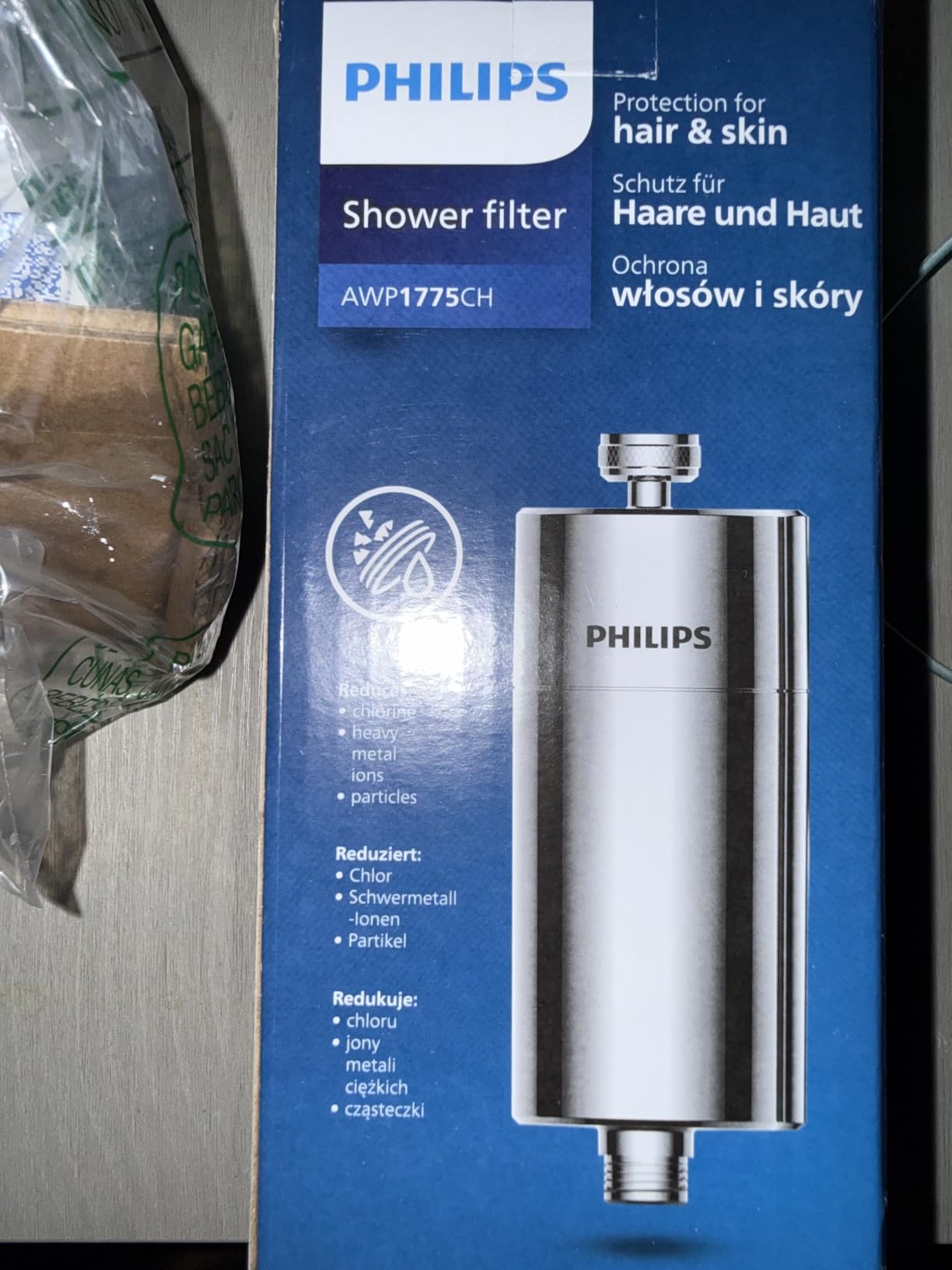
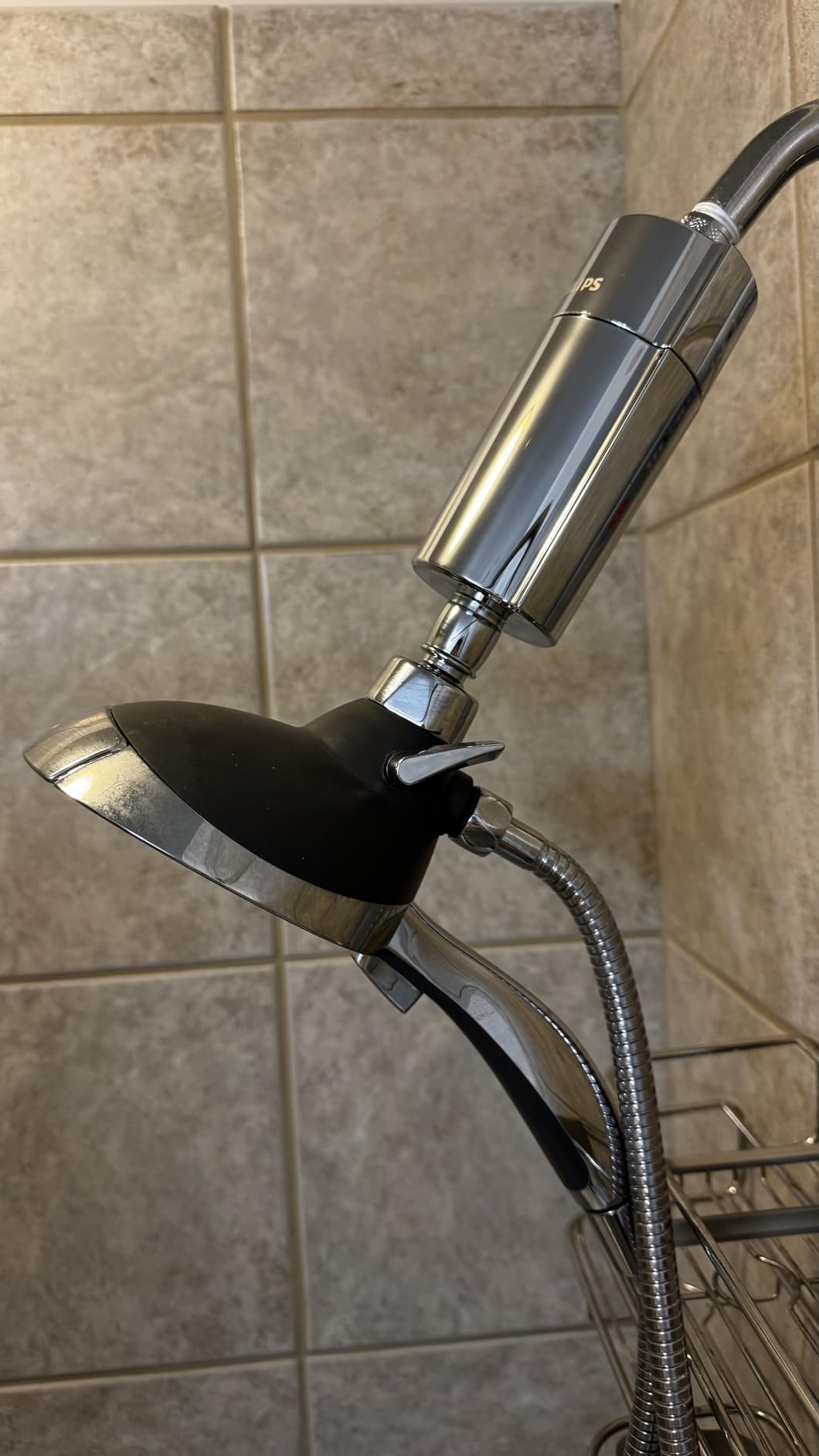
The body is a narrow chrome-finish metal cylinder with anti-scald construction that works with hot and cold water, and at 2.4 inches wide it adds less length to the arm than the bulkier plastic housings. Installation is tool-free on any standard 1/2 inch threaded arm and took us about two minutes. Replacement cartridges use model AWP175.
The 4.2 average is the lowest here, and the rating distribution shows a real 14 percent three-star cluster. Most of that comes from buyers who expected a total dissolved solids reduction and correctly concluded they had bought the wrong type of product. Rated on what it claims to do rather than what people hoped it would do, the filter performs consistently.
Where certified media matters most
This is the pick when you care about verification over feature count, when an old home has galvanized plumbing contributing rust to the shower line, or when you simply do not want to decode a 23-stage stack. A named replacement cartridge model and a stated gallon capacity mean you will not spend an evening finding the right part. The slim metal body also suits a bathroom with a modern chrome fixture set.
Where TDS expectations need managing
If you plan to judge this filter with a TDS meter, it will read as a disappointment, because it is built for chlorine and metals rather than mineral reduction. The lower rating reflects that mismatch more than any build or performance problem. It is also a light unit, so on a heavy rain head the weight is not the issue but the modest three-stage media volume is worth considering against a multi-cartridge design.
7. Veken One-Press Shower Filter – Easiest Cartridge Change We Found
Veken Shower Filter, Chlorine, Lead & Sulphide Tested, One-Press Cartridge
Inline one-press unit
Calcium sulfite, carbon and KDF
3.31 inch wide
3 month cartridges
Pros
- One-press change means you never remove the shower head
- Compact body adds minimal length
- Lab-tested for lead and sulphide
- Consistent pressure in use
- 80 percent five star rating
Cons
- Smallest review base in this roundup
- Hand-tightening carefully to avoid leaks
- Shorter 3 month cartridge interval
The Veken solves the single most irritating part of shower filter ownership, which is the swap. With a screw-in cartridge you remove the shower head, unscrew the housing and deal with a wet arm every three months. This one presses a release, drops the spent cartridge and pushes a new one in from the front, all in seconds, which for a renter or a tall household is worth more than another five media stages.
Media content is unusually honest for the category: calcium sulfite, coconut shell carbon and KDF, with the manufacturer stating there are no inert fillers. The U-shaped channel lengthens the water path so it runs past the media more slowly, and the unit was lab-tested for lead and sulphide reduction rather than merely claiming heavy metal removal.
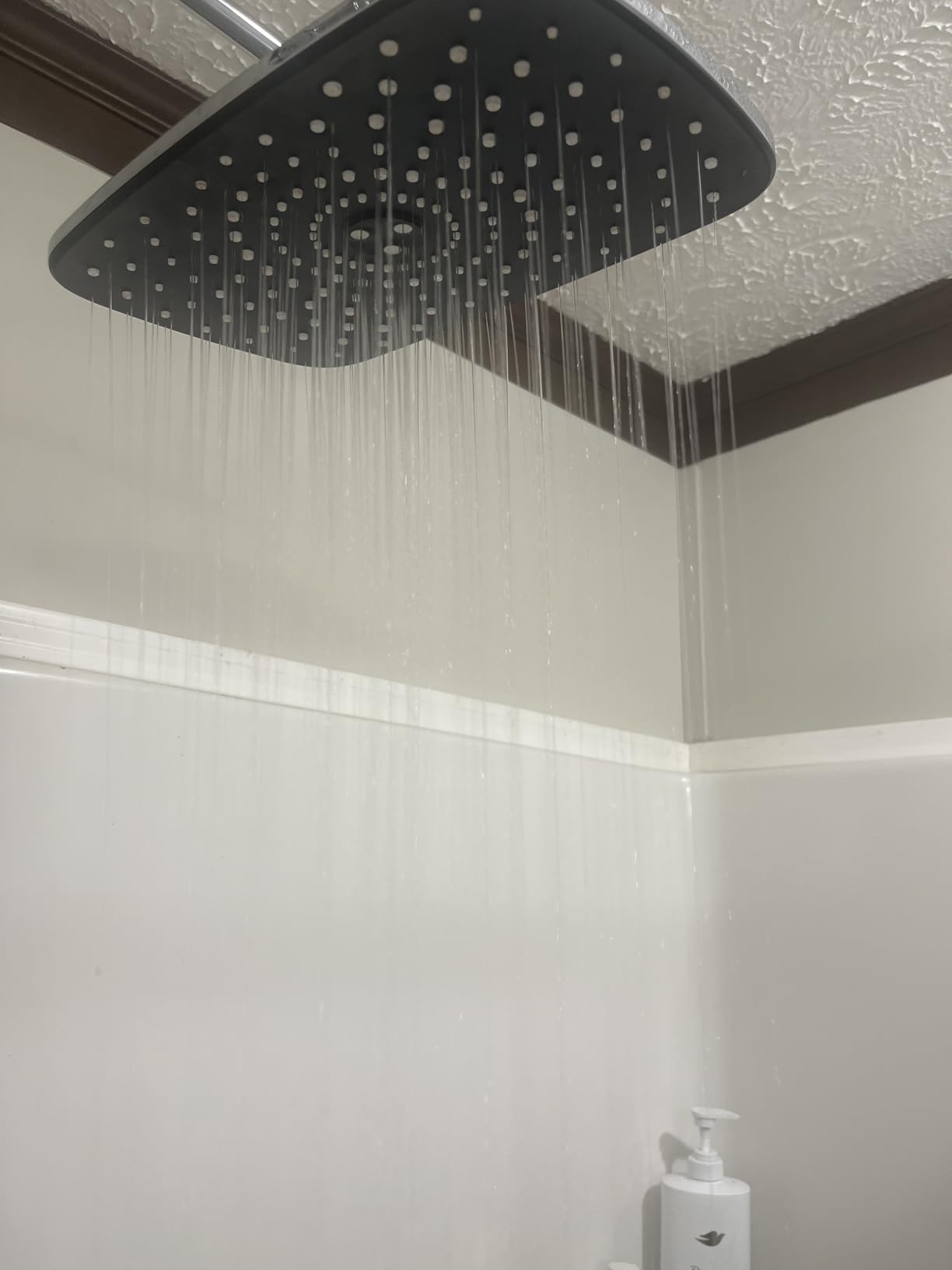
Reviewers like the compact body, which extends the shower head downward less than a traditional filter and avoids the droop you get with a bulky housing. Pressure stayed consistent across our weeks of use, and owners describe the water as tasting cleaner with no drop in flow even as the cartridge aged.
Two cautions. The recommended interval is every three months, which is the shortest in this roundup and means more frequent consumable spending, and the housing must be hand-tightened firmly but carefully, since under-tightening leaks and over-tightening cracks the thread, particularly under a heavier rain head. Owners with 80 percent five star ratings report the install takes four steps.
Where frequent swapping is the priority
Pick this if you have committed to changing cartridges on schedule rather than running them to failure, if a family shares one shower and you want the job to take fifteen seconds instead of a small plumbing project, or if your shower head sits high and a long inline body would be in your way. The carbon content and calcium sulfite combination is well suited to chlorine-heavy municipal water where smell is the daily complaint.
Where a small review base and hand-tightening bite
With 656 reviews, this is the least battle-tested product here, and while the 4.6 average is excellent, long-term durability data is thin compared with units with tens of thousands of reviews. The three-month interval is a real ongoing cost if you are not disciplined about it. And if your setup has a heavy fixed head rather than a handheld on a hose, tighten by feel and check for weeping at the base twice in the first week.
8. MakeFit 7 Setting Filtered Shower Head – Fastest Install and a See-Through Cartridge
MakeFit Filtered Shower Head – High Pressure Shower Head with Filter for Hard Water Softener – 7 Settings Bathroom Rain Showerhead to Remove Chlorine and Heavy Metals (Chrome)
Fixed filtered head
7 spray modes
Transparent cartridge
5.2 x 4.7 inches
Pros
- One minute tool-free installation
- Transparent cartridge shows when a change is due
- Air-induction design holds pressure at low flow
- Two-year warranty included
Cons
- Some buyers measured no drop in dissolved metals
- Body reads as bulky in a small stall
- Build quality reported uneven between batches
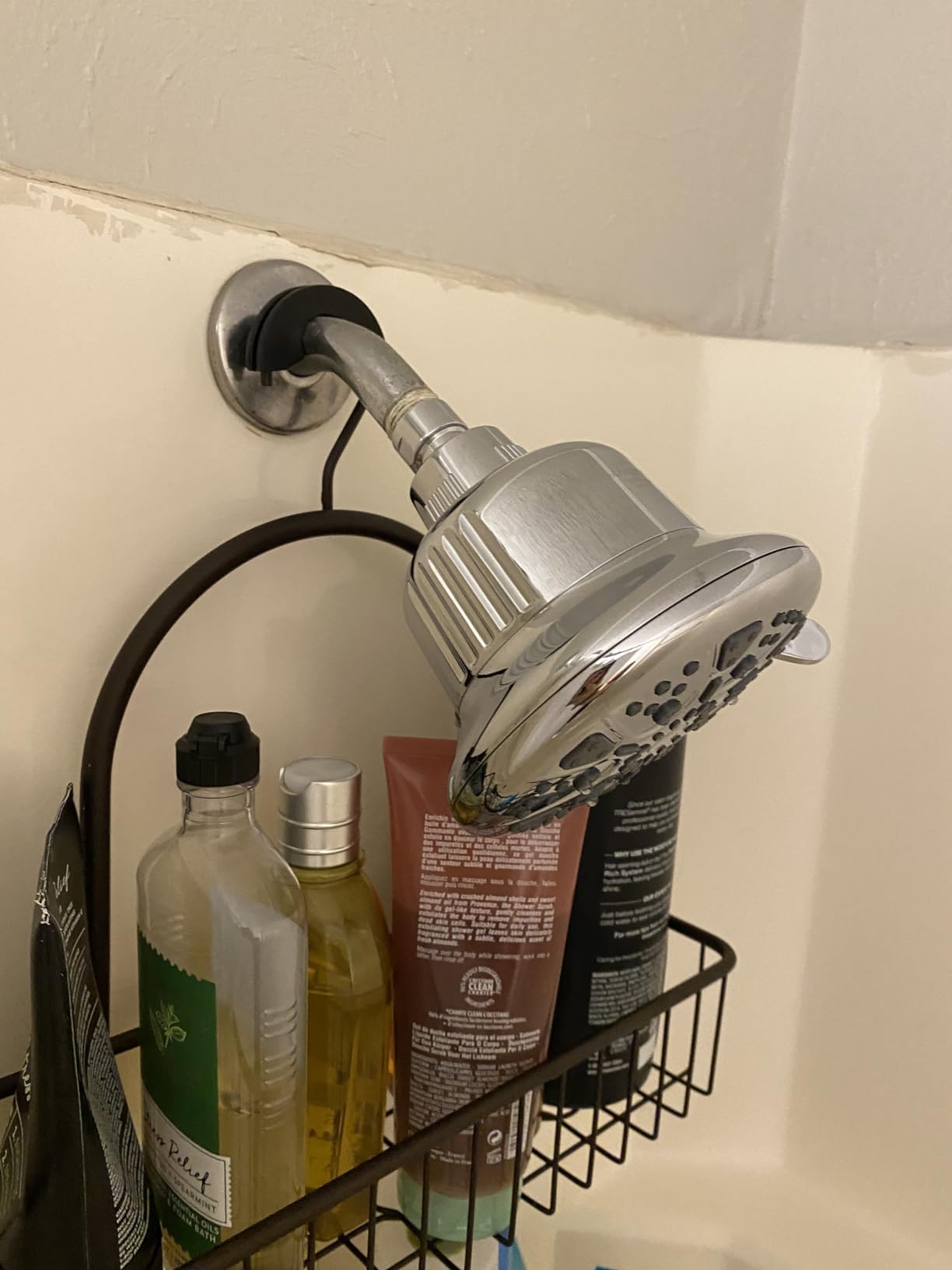
The MakeFit is the one we recommend when someone asks for a starting point rather than the last word. It combines a 7 spray setting head with an integrated filter using KDF-55, calcium sulfite and vitamin C media, and it installs on a universal G1/2 inch thread in about a minute with no tools. A Teflon tape roll, a spare rubber washer and a two-year warranty come in the box.
The transparent cartridge is the feature we did not expect to care about and now recommend most. On every other inline unit you are guessing when to change based on water smell, and here you can literally look at the media and see it darken. Owners report softer hair and less dry skin within days in hard-water homes, and the air-induction spray design keeps the stream feeling strong despite the added filtration.
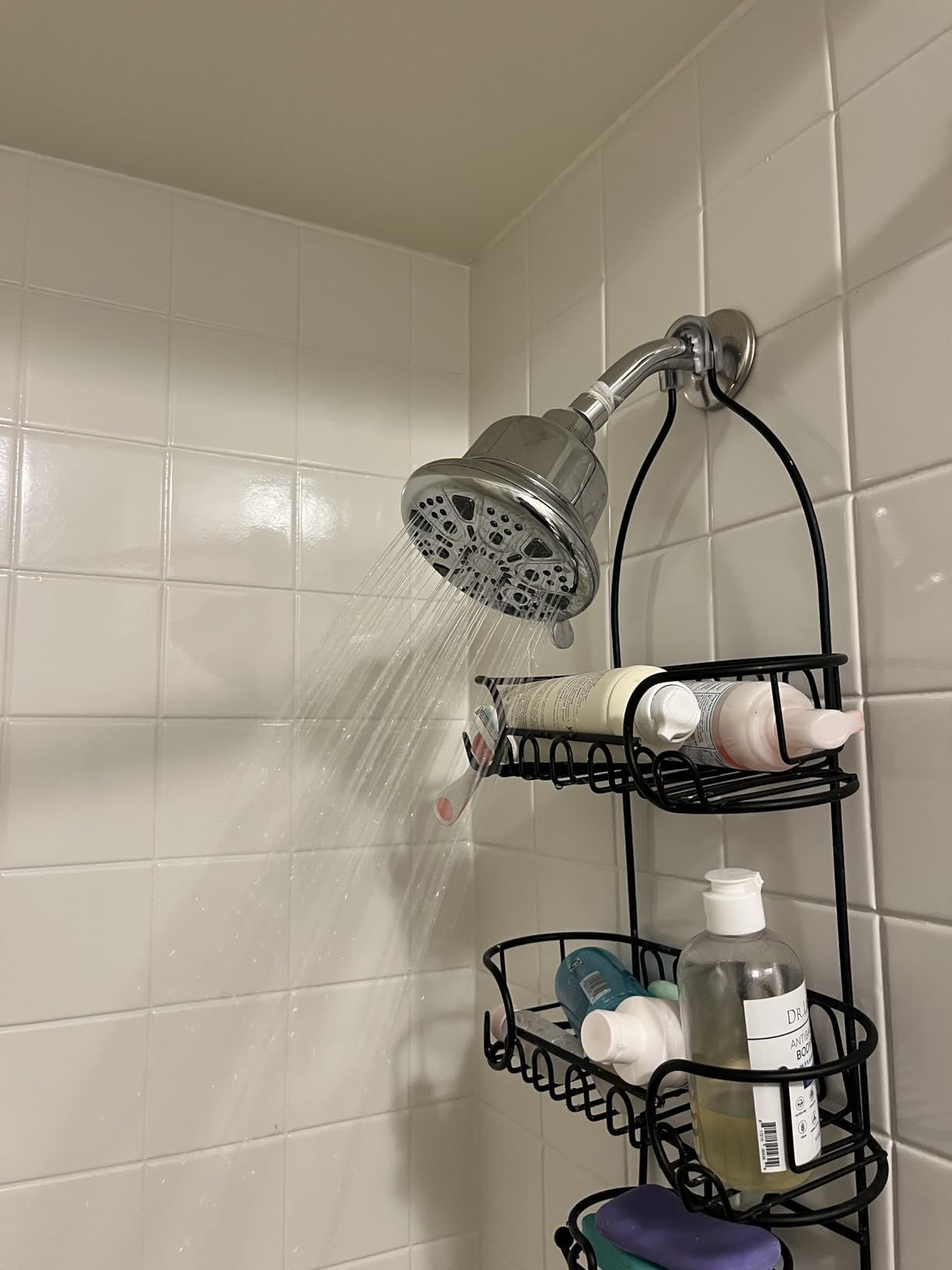
The brass swivel ball joint and anti-clog nozzles are sensible details that most budget heads skip. The all-in-one tall design is the trade, though, and in a small shower the unit reads as bulkier than the four inch FEELSO head. The seven modes cover rain, massage, intense and mist, which is more than most of the inline filters offer because they come with a head rather than a filter alone.
Two honest weaknesses. Several buyers who tested with a TDS meter saw no measurable reduction in dissolved metals or fluoride, which is exactly the same limitation as every other cartridge filter here and not a defect, and a long-term reviewer reported build quality declining between production batches with weaker pressure and fewer working spray options on later units.
Where a one-minute swap and visible cartridge help
This fits a first apartment, a rental, or any shower where you want to test whether filtration matters to you before committing to a premium setup. The visible cartridge removes the most common failure mode, which is running a filter far past its useful life, and the two-year warranty gives you a fallback if the mode switch fails. Households showering in the morning and evening will feel the pressure advantage of the air-induction design immediately.
Where bulk, TDS and batch inconsistency annoy
If you have a compact stall and a slim fixture set, the height of this head works against you, and if you are chasing mineral reduction it will not deliver regardless of price. The batch variation is the harder issue to argue around: if you buy one and love it, a second purchased later may not match. For a shared household bathroom used constantly, a metal-bodied unit is the more predictable buy.
9. SparkPod 23 Stage Shower Filter – The Longest Inline Media Stack
SparkPod 23-Stage Shower Head Filter for Showerheads, Black Matte
Inline ABS capsule
23 stage media
3 month cartridges
4.61 x 3.19 inches
Pros
- Longest listed media stack among inline units
- Maintains original pressure
- Tool-free install in about 30 seconds
- Five finishes to match existing hardware
Cons
- Cartridges can need changing within weeks in very hard water
- Standing water can sit in the housing
- Replacement cartridges are an ongoing cost
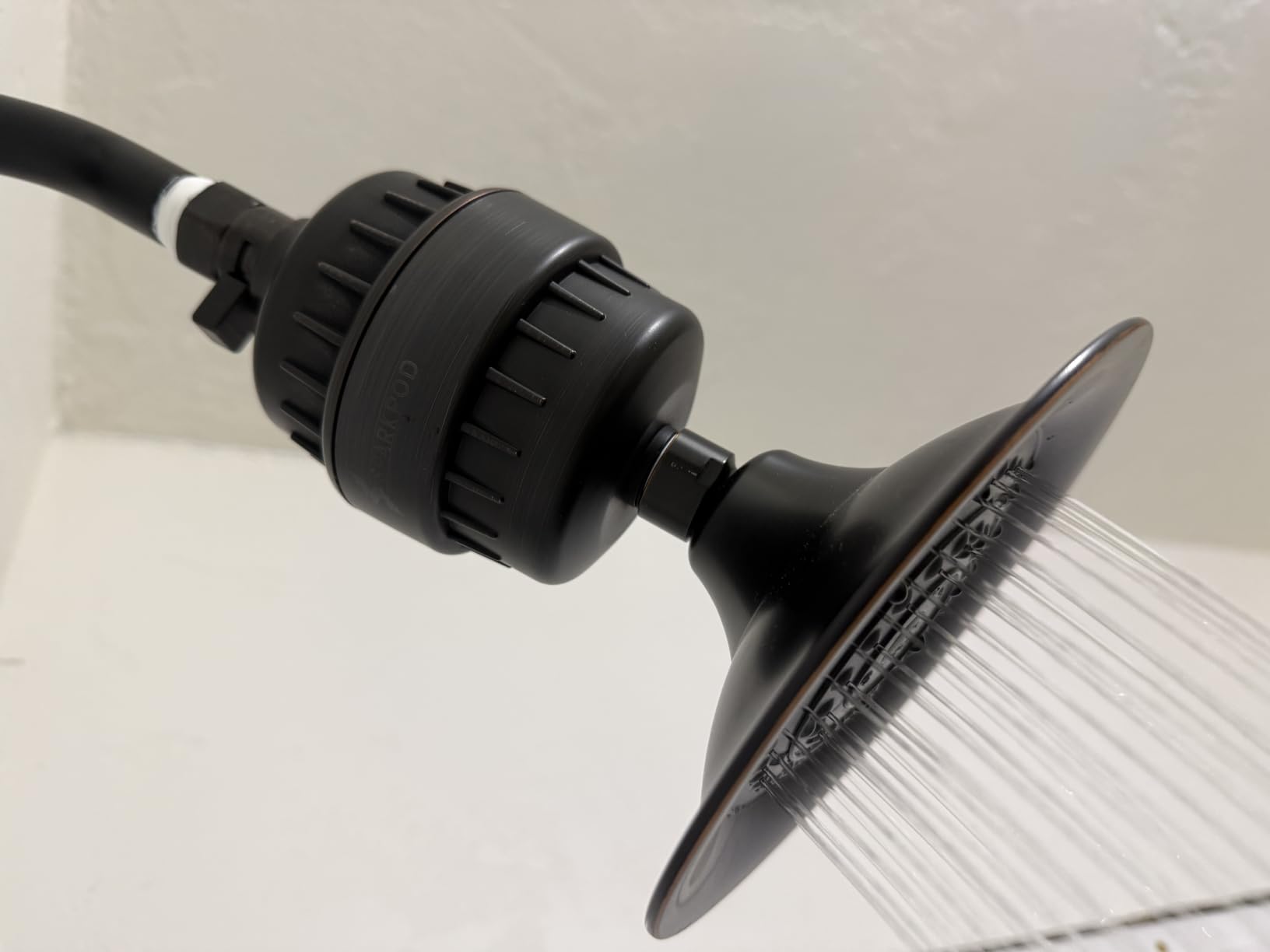
The SparkPod sits at the opposite end of the design spectrum from the Veken. Instead of optimizing for a fast cartridge change, it optimizes for media volume, and at 23 stages it has the longest listed stack among the inline filters in this roundup. The media combines activated carbon, KDF, calcium sulfite, vitamin C and mineral and ceramic balls, all of which have a legitimate job even though the stage number is a marketing device.
Owners in hard-water regions report reduced itching, softer hair and no measurable pressure loss, and we could not fault the install time: roughly 30 seconds with plumber tape, two silicon gaskets and a screened gasket included. The rustproof ABS capsule attaches to any 1/2 inch pipe, and five finishes are offered so it can match existing chrome or bronze hardware.
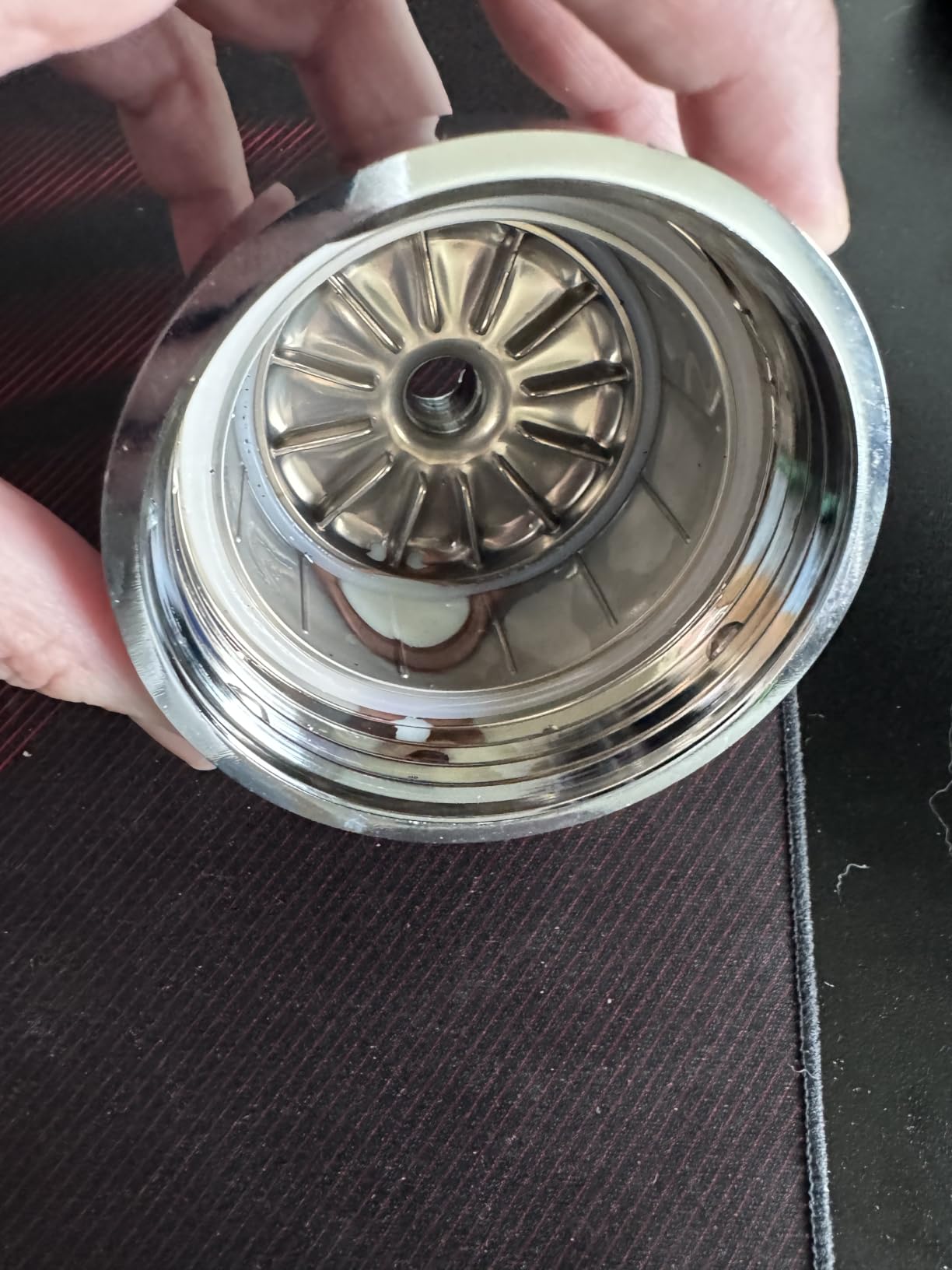
There is a real trade here between media volume and cartridge life. The replacement cartridges are rated at about three months, and in extremely hard water some users found them exhausted within a few weeks, which turns the long media stack into a shorter service interval rather than a longer one. That is a property of heavy mineral load, not a fault, but it changes the cost per year sharply.
One more practical note: in humid or poorly ventilated bathrooms, some owners report standing water in the housing between showers. It is minor, but it is the kind of thing you notice, and it is one reason a few long-term users moved to all-metal setups. A one-year manufacturer warranty is included.
Where stage count and finish matching matter
This is the pick when appearance is part of the decision and you would rather not install a bright plastic cylinder in a tiled bathroom, since the finish options cover polished chrome, brushed nickel, matte black, oil-rubbed bronze and gold. It also suits a household already comfortable with a fixed replacement rhythm, because the tool-free install makes a three-month change genuinely easy. Media volume is a reasonable proxy for how much chlorine and sediment capacity sits in the path.
Where cartridge life and standing water hurt
If your water is hard enough that a cartridge lasts weeks rather than months, the ongoing cost of this design climbs faster than any other here, and you should budget accordingly before committing. The standing water report in humid bathrooms is cosmetic rather than functional, but it can bother people. For very hard wells, filtering at the whole-house level is the more efficient place to spend effort, as our whole-house well water guide explains.
10. AquaHomeGroup 20 Stage Shower Filter Plus 5 Cartridges – The Longest Supply Run
AquaHomeGroup Shower Head Filter — 20-Stage + 5 Replacement Cartridges — Reduces Chlorine and Other Chemicals — Vitamin C, E & A Shower Filter for Healthier Skin & Hair
Inline 20 stage unit
5 cartridges included
0.13 kg body
Vitamin C and E stages
Pros
- Five replacement cartridges in the box
- Helps clear existing limescale and rust on heads
- Hand-tight install with no pressure loss
- Works with wall
- handheld
- rain and combo heads
- Light 0.13 kg body
Cons
- Plastic threaded insert can crack if forced
- Supplied washers can restrict flow if not removed
- One owner reported drier hair after installing
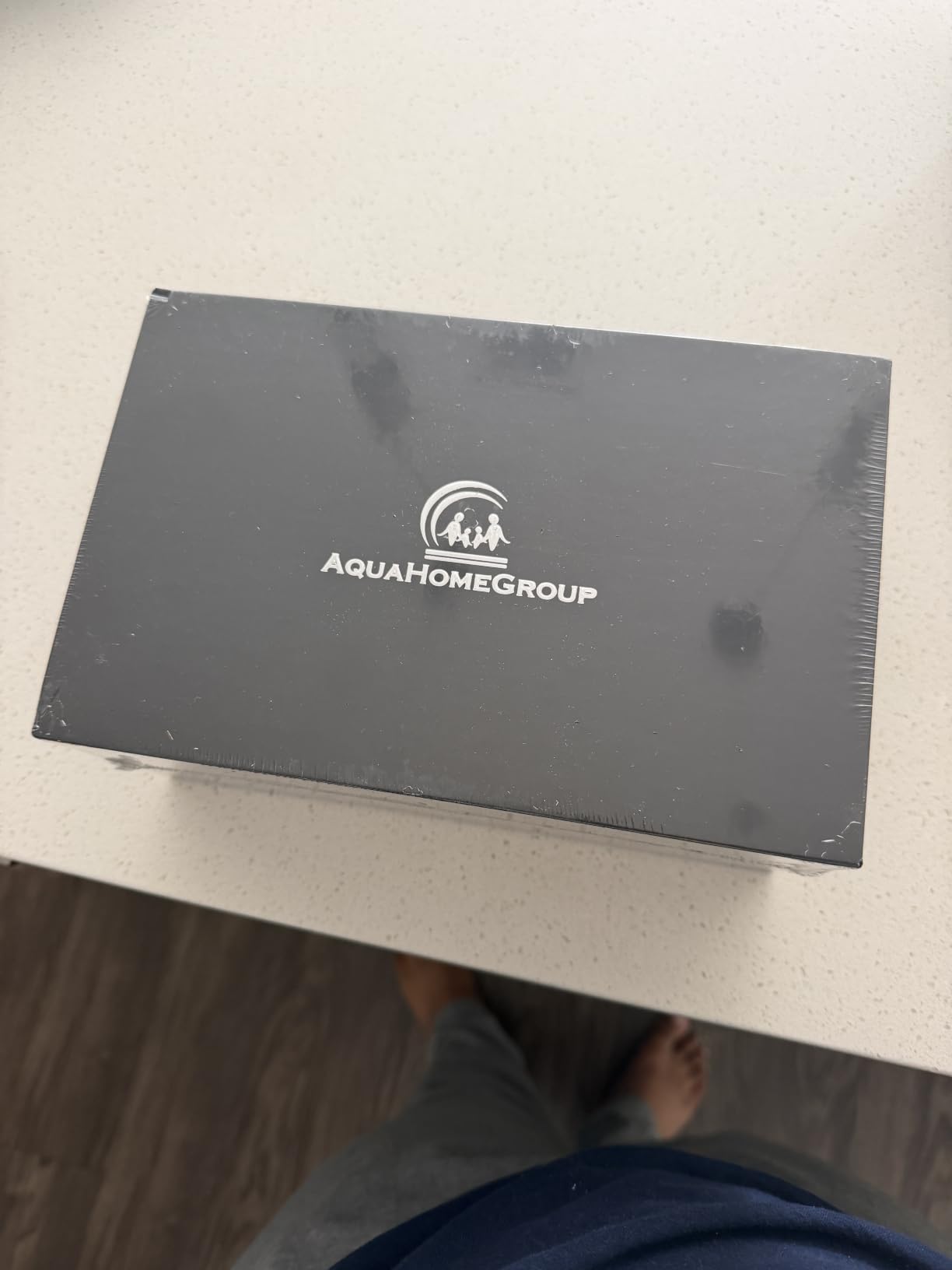
The strongest argument for this AquaHomeGroup is arithmetic. Five replacement cartridges are in the box, which for most households is more than a full year of media before a single order, and it removes the single biggest source of buyer frustration in this category, which is the hidden recurring expense that listings never surface up front. It fits wall-mounted, handheld, rainfall and combo heads on a standard arm.
The 20 stage media set targets chlorine, heavy metals, sediment, rust and iron, with vitamin C and E stages included for dry, sensitive and dandruff-prone skin. Owners in very hard water report softer skin and hair within a few weeks, and several mention that the filter helps clear existing limescale and rust build-up on the shower head itself, which is a tidy secondary benefit when the head is older.
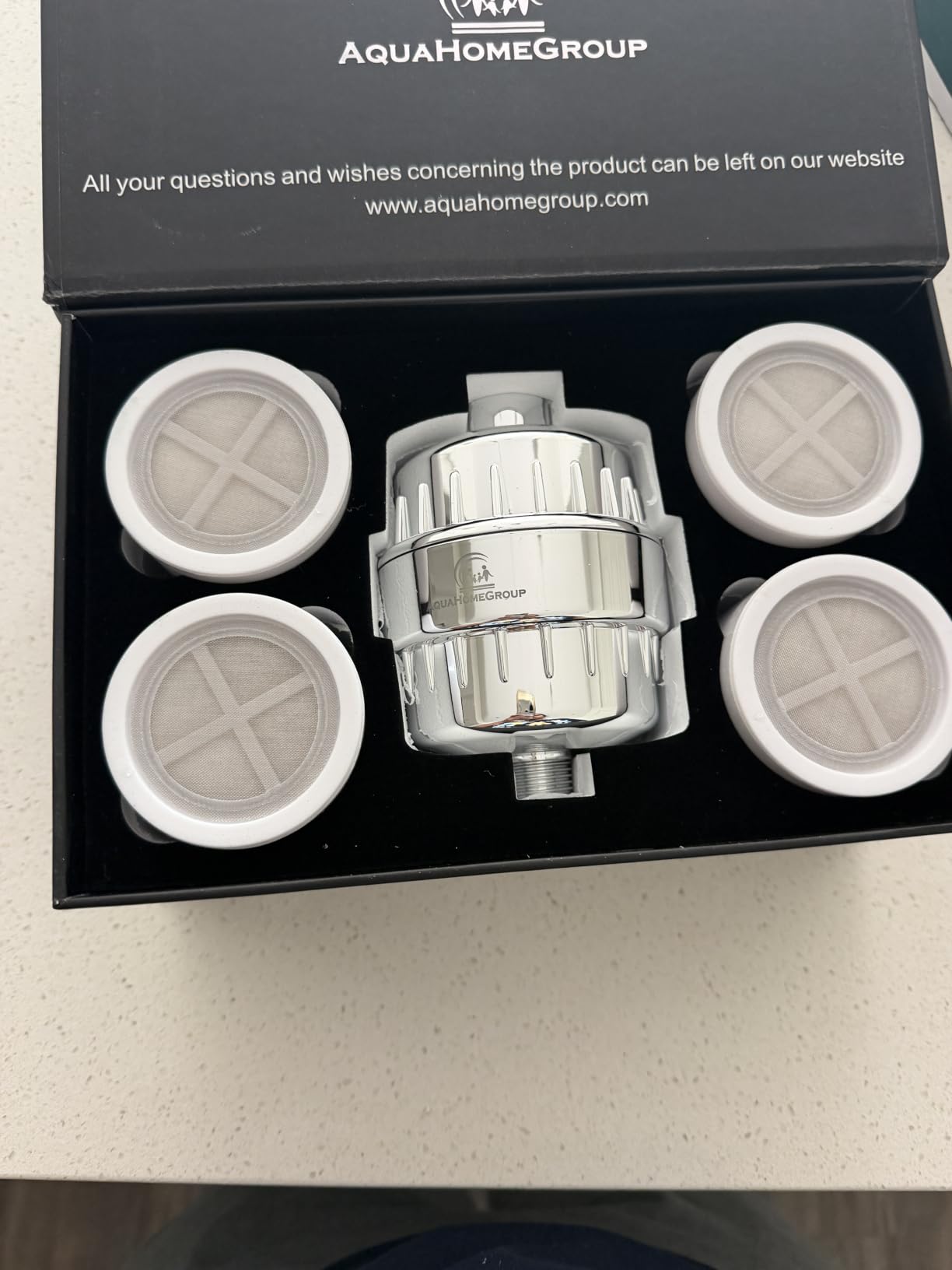
External testing certification is listed, and the body weighs 0.13 kg, so it is light on the arm. The housing is designed to hold consistent flow and reduce particle build-up over time, and in our weeks of use the stream held steady after hand-tight installation with no wrench.
Two recurring negatives are worth planning around. The plastic threaded insert can crack if the housing is forced while hand-tightening, and the rubber washers shipped in the box can restrict flow if they are not removed, which presents as sudden pressure loss that looks like a clogged cartridge. One reviewer also reported hair becoming drier after installing and removed it, which is the honest variance you should expect in any skin and hair category.
Where the cartridge supply matters
Pick this if you want to stop thinking about filter supplies for the first year, if your household uses a lot of water and would otherwise be reordering every three months, or if you live somewhere with sediment and rust in the supply. It is also a sensible first hard-water purchase because the included supply means an early cartridge change, the most common first-year mistake, costs you nothing. The fit across all four shower configurations makes it flexible in a mixed-property home.
Where the threaded insert cracks
Hand-tightening is genuinely enough here, and the moment you reach for pliers you risk cracking the insert, which is the leading complaint in this product reviews. The supplied washers are the other trap, since leaving them in restrict flow badly enough to look like a failed filter. And if your main goal is softening, note again that no amount of additional media stages changes that, which is the argument in the section below.
What to Look for When Buying a Shower Filter for Hard Water
Five things separate a filter that works from one that sits on your arm looking convincing. Everything else in the listing is decoration.
Third-party certification. Third-party certification is the only quality signal that means anything. NSF and NSF/ANSI 177 exist specifically for shower filters and verify structural integrity, pressure and capacity claims along with a defined contaminant reduction. Two products here list external testing certification and the PHILIPS unit uses 100 percent NSF-certified KDF media.
Media type, not media count. Media type decides what happens. KDF-55 copper-zinc reduces chlorine, heavy metals and sediment, calcium sulfite converts chlorine and neutralizes residual odor, activated carbon adsorbs chlorine, taste and organics, and vitamin C targets chloramine specifically. A 23-stage label built on thin layers of the same carbon is worth less than a three-stage unit with real amounts of KDF and calcium sulfite.
Cartridge cost per year, not the sticker. Cartridge cost per year is the number that matters and almost nobody publishes it. Divide the cartridge cost by the months of rated life, multiply by twelve, and add the first unit. Do that math for every candidate before you order anything.
Form factor versus your plumbing. Form factor must match your plumbing. An inline unit preserves the shower head you own and fits any standard 1/2 inch arm, but adds length and can droop. An integrated filtered showerhead replaces the head, which is a win if it was due anyway and a loss if you like what you have. A handheld bundle suits renters and anyone who rinses hair.
Flow rate. Flow rate is the spec you feel every morning. Anything at or below 1.8 GPM will feel gentle, which some people prefer, while 2.5 GPM feels like a normal unfiltered shower. If your plumbing is already marginal on pressure, a high-output design is the safer choice than a compact one.
Two extras worth a look before checkout. Check your municipal water quality report, which is usually published annually and lists hardness in grains per gallon along with the disinfectant used. If your city uses chloramine rather than free chlorine, prioritise carbon and vitamin C stages over calcium sulfite. And if you are on a private well, the problem is often sediment or iron rather than hardness, and whole-house treatment handles it better than a shower accessory, whether you start with sediment filters for well water or a dedicated iron unit.
Filter vs. Shower Softener vs. Whole-Home Softener
Filters clean water. Softeners change it. That single distinction decides what you should buy, and getting it backwards is the reason so many people install a shower filter and conclude nothing happened.
Inline or integrated shower filter removes chlorine, chloramine, sediment, rust and some heavy metals. It does not lower hardness, does not reduce total dissolved solids, and will not clear existing scale. Choose it for skin, hair and odor.
Point-of-use shower softener uses ion exchange resin to swap sodium or potassium for calcium and magnesium, which does reduce hardness at that tap and does soften water. It is the only shower-mounted category that answers the hard water question directly, and designs of this type come up constantly in the r/WaterFilters discussions, where the recurring consensus is that a standard filter will not fix hard water.
Whole-home softener treats every outlet, which is the only way to stop scale on dishware, washing machines and the kettle as well as the shower. It costs more and needs salt and regeneration cycles, but it is the correct answer for a house that has hard water symptoms everywhere. Our softener roundup covers the choices.
The decision gate is short. If the problem is hair, skin, chlorine smell and soap scum in one bathroom, a shower filter from this list is the right spend. If you also have spots on glass, crusty faucets and appliances that scale up, you have a whole-house hardness problem and a shower filter is at best a partial measure. If scale on the shower glass itself is your number one annoyance, a point-of-use softener is the only device that will change it.
What Actual Users Report After a Few Months
Because Google surfaces a dedicated discussions block for this query, real reports are unusually easy to find, and the pattern is consistent enough to be useful.
The most common consensus, repeated across r/WaterFilters, r/Rosacea and r/okinawa, is that a standard filter will not fix hard water and that buyers feel sold to when a listing implies otherwise. That is the trap this roundup has tried to defuse from the first paragraph. Where filters do earn repeat praise is chlorine odor, water taste and the way skin and hair feel, with most owners describing a change in the first few weeks rather than a dramatic one.
On hair specifically, expectations are modest and honest. A poster in r/HaircareScience describes using a clarifying shampoo for hard water weekly alongside a showerhead filter and characterizing the filter as helping a little bit, which is the most accurate expectation we found. A user in r/Apartmentliving with eczema and sensitive skin reports a large difference after switching to a filtered head, while a long-term r/WaterFilters user still runs an older filter on annual cartridge changes and is satisfied with the low cost and the modest pressure trade-off.
Timelines run from two to six weeks for the chlorine and skin and hair effects, with hardness results never arriving from a cartridge at all. For households that also treat tap water or run an ice machine, the filtration side of the problem is covered in our ice machine water filter guide.
Four Marketing Traps in the Shower Filter Category
Every trap below is visible in listings on this page, which is why we call them out rather than writing around them.
Stage inflation. A stage count is not a performance figure. A 20 or 23 stage label usually counts thin layers of similar material, and the number tells you nothing about media volume, contact time or contaminant capacity. Judge the media by type and quantity, not by the number of stages printed on the box.
Softening claims. Any listing that says a cartridge filter softens water, or softens hard water, is describing ion exchange behavior that a KDF and carbon stack cannot perform. The PHILIPS listing is the model here, stating in its own specifications that the unit does not reduce total dissolved solids. That kind of clarity is rare.
Self-tested percentages. A claim that the filter reduces chlorine by 99.9 percent is close to meaningless unless a named third party tested it to a published standard. A unit with external testing certification and 100 percent NSF-certified media is worth more than any percentage printed without a lab behind it, and the two products in this group that list external testing certification are the ones we would buy on principle.
Transformation promises. Claims about curing eczema, stopping hair loss or reversing brassiness are not filter claims, they are medical claims, and no shower filter makes them. What a filter can reasonably promise is less chlorine exposure, less odor and less sediment on your skin. Expectations set at that level are the ones that tend to be met.
How to Install a Shower Filter Without Leaks or Pressure Loss
Every unit on this page installs on a standard 1/2 inch arm without a plumber, and the whole job takes between 30 seconds and four minutes depending on the design. The steps below cover the inline units, which are the most common.
Turn off the water at the main if you want zero drips. For a shower arm, shutting the household water for two minutes prevents a steady trickle while you work and makes catching the washer far easier.
Check the connection first. Confirm your arm is a standard 1/2 inch thread. If you have an unusual wall-mount or a European-sized thread, stop, because no inline unit here will fit and you need the integrated head options instead.
Remove the existing shower head. Unscrew the head, clear any old plumber tape off the threads, and check the rubber washer at the end of the arm. Replace it if it is hardened or split.
Wrap the tape properly. Wrap PTFE tape two or three times in the direction of tightening, with no gaps and no tape on the outer half inch. This is the single most common cause of a weeping joint, and two products here include tape thin enough to cause exactly that.
Fit the filter hand-tight. Screw the housing on until it seats firmly, then about a quarter turn further. Do not use pliers on a plastic-bodied unit, and note the care needed on a heavy rain head versus a handheld on a hose.
Restore the water and check for weeping. Run the shower for two minutes, then check the joint with a dry tissue. A weep means one more wrap of tape and a re-tighten, not a plumber.
If pressure drops noticeably, work through the cause rather than blaming the filter. Check that no rubber washer shipped in the box is still sitting inside the housing, because that is a reported issue on two products here and it presents exactly like a clogged cartridge. Confirm the cartridge is seated and oriented correctly, since some housings accept it either way but not all. In very hard water, an aged cartridge can clog within weeks, and replacing it restores flow. If pressure was already marginal before the install, a high-output design such as the impeller-driven inline unit is a better fit than a compact housing.
Finally, set a replacement reminder. Rated cartridge lives in this group run from three months for the one-press unit and the 23-stage inline filter to four to six months for the certified-media inline filter, with the 12000 gallon cartridges quoted at six to eight months for a family of four. Running a cartridge past its rating is the most common reason people decide a filter does nothing.
Frequently Asked Questions
Do shower filters for hard water actually work?
Partly. A shower filter for hard water reliably removes chlorine, chloramine, sediment, rust and some heavy metals, which improves how skin and hair feel and cuts chlorine odor. It does not reduce hardness, so scale on glass and tile returns regardless of the filter you choose. Only a point-of-use softener or a whole-home softener lowers hardness.
Is there a shower filter that can actually soften water?
Only a unit that uses ion exchange resin, and that is a shower-mounted point-of-use softener rather than a cartridge filter. KDF-55, calcium sulfite, activated carbon and vitamin C media bind or neutralize contaminants but leave calcium and magnesium dissolved. Every filter in this roundup removes contaminants and none of them soften water.
What are the downsides of using shower filters?
The main downsides are a recurring cartridge cost that listings rarely surface, a possible pressure reduction as media ages, an inline housing that adds length and can droop on a heavy rain head, and the fact that no cartridge filter reduces hardness. Dwell time in a humid bathroom can also leave standing water in some housings, and plastic thread inserts can crack if overtightened.
Do dermatologists recommend shower filters?
A filtered shower is a low-risk step for sensitive skin because it lowers chlorine exposure, which dries and irritates skin. Dermatologists generally frame filters as supportive rather than treatment, and no filter should be presented as a cure for eczema, rosacea or hair loss. Anyone with an active condition should treat it as a medical matter and use the filter only to reduce irritation from the water itself.
What shower filter is best for hard iron water?
Hard iron needs dedicated iron treatment, not general shower filtration, and a cartridge filter is the wrong tool. For a private well, start with whole-house iron filtration so the problem is handled before it reaches any tap, and use a sediment filter upstream of it if the water is visibly rusty. Inline shower filters with KDF and sediment stages reduce staining in the shower but will not treat the supply.
How long does a shower filter last, and how do filtered shower heads help hair?
Rated cartridge life in this group runs from about three months to six to eight months for a family of four, and hitting the rating matters because an exhausted cartridge is the most common reason filters seem to do nothing. On hair, filtered heads help most with chlorine stripping, brassiness and the film that hard water and soap leave behind, and most owners describe a modest change over two to six weeks rather than a dramatic one.
Final Verdict on the Best Shower Filters for Hard Water
For most hard-water households the Aquabliss SF100 is the unit to buy. It fits every standard shower configuration, installs in under two minutes with no tools, holds pressure, and has the largest body of real-world reports behind it by a wide margin. If your current showerhead is due for replacement anyway, the AquaHomeGroup 20+3 stage handheld gives you the strongest flow and the most complete media set in one part. If you would rather not deal with screw-in cartridges at all, the Veken one-press design changes in seconds, and if consumable cost is the deciding factor, the SR SUN RISE and the five-cartridge AquaHomeGroup both carry you through a full year from the box.
Keep the honest limit in view as you shop. Every filter here improves odor, taste, sediment and the feel of skin and hair, and none of them lower hardness. Check your water report first, and if scale on glass, faucets and dishware is the real complaint, treat the water at the point where it enters the house rather than at the showerhead. That is the honest version of the best shower filters for hard water in 2026: excellent at what filtration does, and honest about what it does not.